

Affordable Eats

Before You Head to the Grocery Store: A Weekly Budget-Shopping Checklist

Share
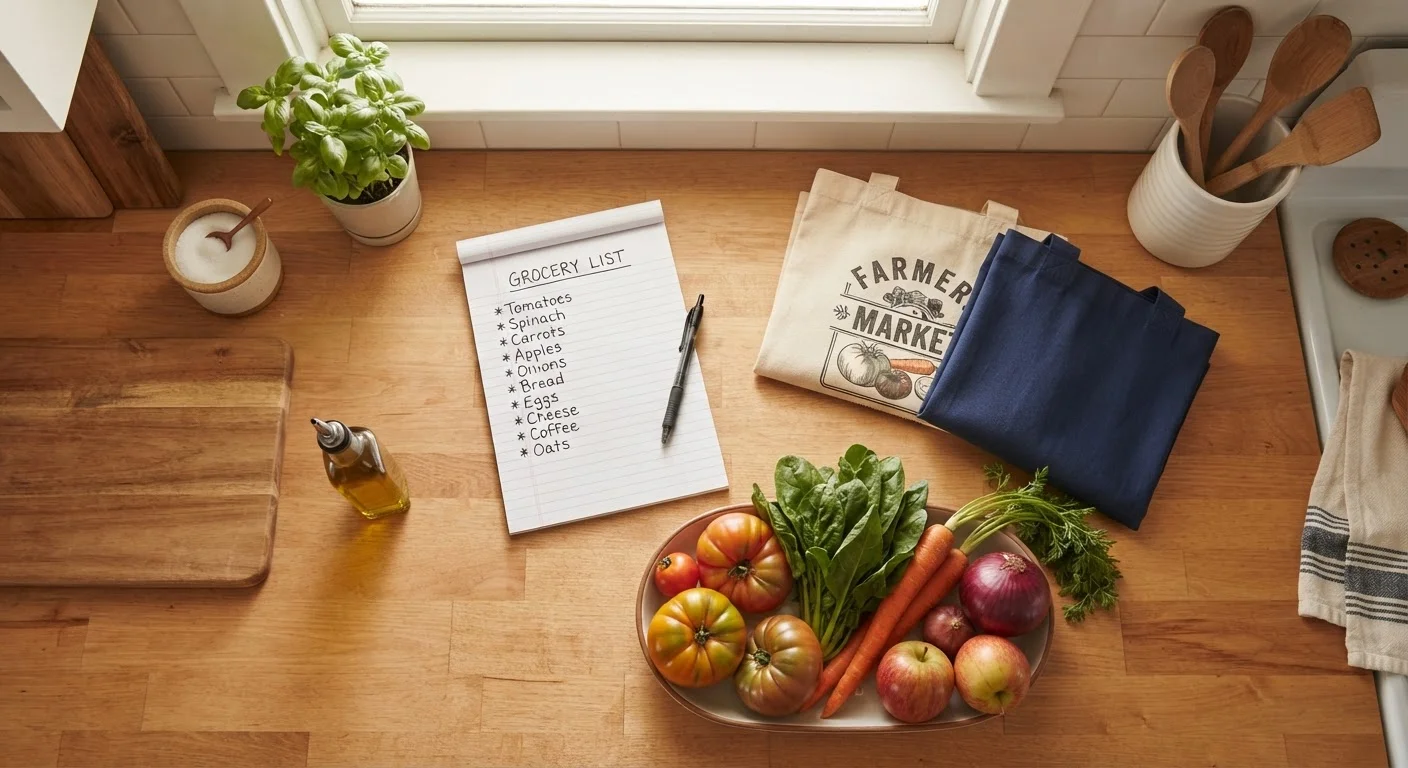
Organized kitchen counter with a grocery list, reusable bags, pen, and fresh vegetables

Key Takeaways

Checking your pantry and fridge before shopping prevents buying duplicates and wasting food.
A meal plan built around weekly store sales can cut your grocery bill without cutting nutrition.
Comparing unit prices (price per ounce or pound) often reveals better value than scanning sticker prices.
Shopping with a categorized list by store section reduces impulse buys and forgotten items.
Setting a firm per-trip budget before you leave gives you a concrete number to shop against.
20–40 min

Summary

24 items · 20 to 40 minutes

Why this checklist matters before you leave the house

Most grocery overspending does not happen at the register. It happens in the ten minutes before you leave home, when you skip the inventory check, skip the list, and head to the store with only a rough idea of what you need. Common habits that inflate food costs are easy to fall into, and this checklist is built to interrupt them before they cost you money.

This is not a system you need to overhaul your kitchen to use. It works with whatever time you have, as long as you run through it before the trip rather than after.

Skip the inventory step and you pay twice

Buying an item you already have at home is one of the most consistent ways families overspend on groceries. Pantry and fridge checks take five minutes and regularly prevent several dollars of unnecessary purchases per trip. Over a year, those duplicate buys add up to real money.

The checklist is divided into four stages: inventory, meal planning, list-building, and in-store navigation. Each stage has items marked by priority so you can focus on the steps that move the needle most.

Tools you will need

Nothing expensive is required. The tools below are what make each stage of this checklist faster and more consistent week to week.

Required

Notepad or phone notes app

Used to build and organize your grocery list by store section before you leave home.

Required

Store weekly circular

Used to identify sale items and plan meals around lower-cost proteins and produce for the week.

Required

Calculator (phone is fine)

Used to calculate unit prices (price per ounce or pound) when comparing package sizes at the shelf.

Optional

Reusable shopping bags

Prevents per-bag fees at checkout in states or stores that charge for plastic bags.

Optional

Store loyalty app

Used to clip digital coupons before entering the store for items already on your list.

The full checklist

Work through these groups in order. The first two stages happen at home; the last two happen at or just before the store. If you are short on time, prioritize every item marked "must" and return to the rest when you can.

For a broader look at where grocery habits quietly drain a budget, see spending patterns worth reconsidering. This checklist fits naturally into a monthly household budget review as well.

Inventory check

Check the fridge, freezer, and pantry before writing anything down so you know what you already have. Must
Pull anything close to expiration to the front so it becomes a meal this week rather than trash. Must
Note staples running low (oil, flour, spices, canned goods) that do not appear on your regular list. Should
Check cleaning and paper supplies so one trip covers household needs alongside food. Nice to have

Meal planning

Plan meals for the week before building your list, including at least one or two meals using what you already have. Must
Check your store's weekly circular (online or paper) and build at least two meals around produce or proteins on sale. Should
Plan one batch-cook meal (soups, grains, beans) that can stretch across two or three dinners or lunches. Should
Write down planned breakfasts and lunches, not just dinners, to avoid last-minute purchases during the week. Should
Account for nights you will not cook (work late, activities) so you plan a realistic number of meals. Must

List building

Write your list organized by store section (produce, proteins, dairy, canned/dry goods, frozen) to avoid backtracking. Must
Set a firm spending target for the trip before you write the list, not after. Must
Mark items where store brand or generic is a reasonable substitute so you can make the swap at the shelf. Should
Flag two or three items where you will compare unit prices in the store rather than committing to a size or brand in advance. Should
Remove any item from the list that does not connect to a planned meal or a confirmed low-stock staple. Must
Add a small buffer (around 10 percent of your target) for items you cannot predict precisely, such as produce priced by weight. Nice to have

Pre-trip logistics

Eat before you go, or at minimum avoid shopping when very hungry, since hunger increases unplanned spending. Must
Bring reusable bags to avoid per-bag charges at checkout where applicable. Nice to have
Check whether the store's app or loyalty program has digital coupons for items already on your list, and clip them before entering. Should
Confirm store hours if you are shopping at an off-peak time to avoid a rushed trip. Nice to have
Plan to shop during a lower-traffic time (weekday mornings or early evenings) so you can read labels and compare prices without pressure. Should

How to use your list in the store

Once you arrive, the goal is to move through the store without doubling back or browsing. Organize your list by store section (produce, dairy, proteins, dry goods) so you can shop in one pass. Stores are designed to pull you through high-margin areas repeatedly; a section-by-section list reduces how often that works.

Stick to the unit price, not the package size, when comparing options. A larger bag is only better value if the price per ounce is actually lower and you will use the product before it goes bad. Perishables bought in bulk are not savings if half ends up in the trash.

If you have children with you, decide before entering what, if anything, is available for them to choose. A small, defined decision (one piece of fruit, one snack item) gives them input without opening the door to unplanned spending.

This checklist also pairs well with a room-by-room look at what you already own. The household declutter audit applies the same before-you-buy logic to non-food purchases. For families watching every line of spending, the Frugal Family Finance hub has additional strategies across categories.

Affordable Eats Editorial Team is the collective byline for our editorial team and contributor network. Articles published under this byline or an editorial pen name are researched, written, and reviewed according to our editorial standards for clarity, consistency, and independence before publication.

View all articles by Affordable Eats Editorial Team →
Disclaimer: The content provided on our blog site traverses numerous categories, offering readers valuable and practical information. Readers can use the editorial team’s research and data to gain more insights into their topics of interest. However, they are requested not to treat the articles as conclusive. The website team cannot be held responsible for differences in data or inaccuracies found across other platforms. Please also note that the site might also miss out on various schemes and offers available that the readers may find more beneficial than the ones we cover.