

| Ingredient listing order rule | Descending concentration down to 1%; any order below 1% (FDA cosmetic labeling regulations) |
| Percentage disclosure required for cosmetics | Not required in the US (cosmetic-only products) (FDA Fair Packaging and Labeling Act) |
| Phenoxyethanol safe-use concentration | Up to 1% (European Commission Scientific Committee on Consumer Safety) |
| Niacinamide studied concentration range | Approximately 2% to 5% (Published cosmetic science and dermatology literature) |
| "Fragrance" declaration coverage | Can represent dozens of individual aromatic compounds (FDA cosmetic ingredient labeling guidance) |
Why ingredient labels look so confusing
Beauty product labels in the United States use the International Nomenclature of Cosmetic Ingredients (INCI) system, a standardized Latin and scientific naming convention adopted globally. A moisturizer that lists "Butyrospermum Parkii" is simply using the INCI name for shea butter. The same ingredient on a more expensive product might appear with its common name in parentheses for marketing reasons, but the compound is chemically identical.
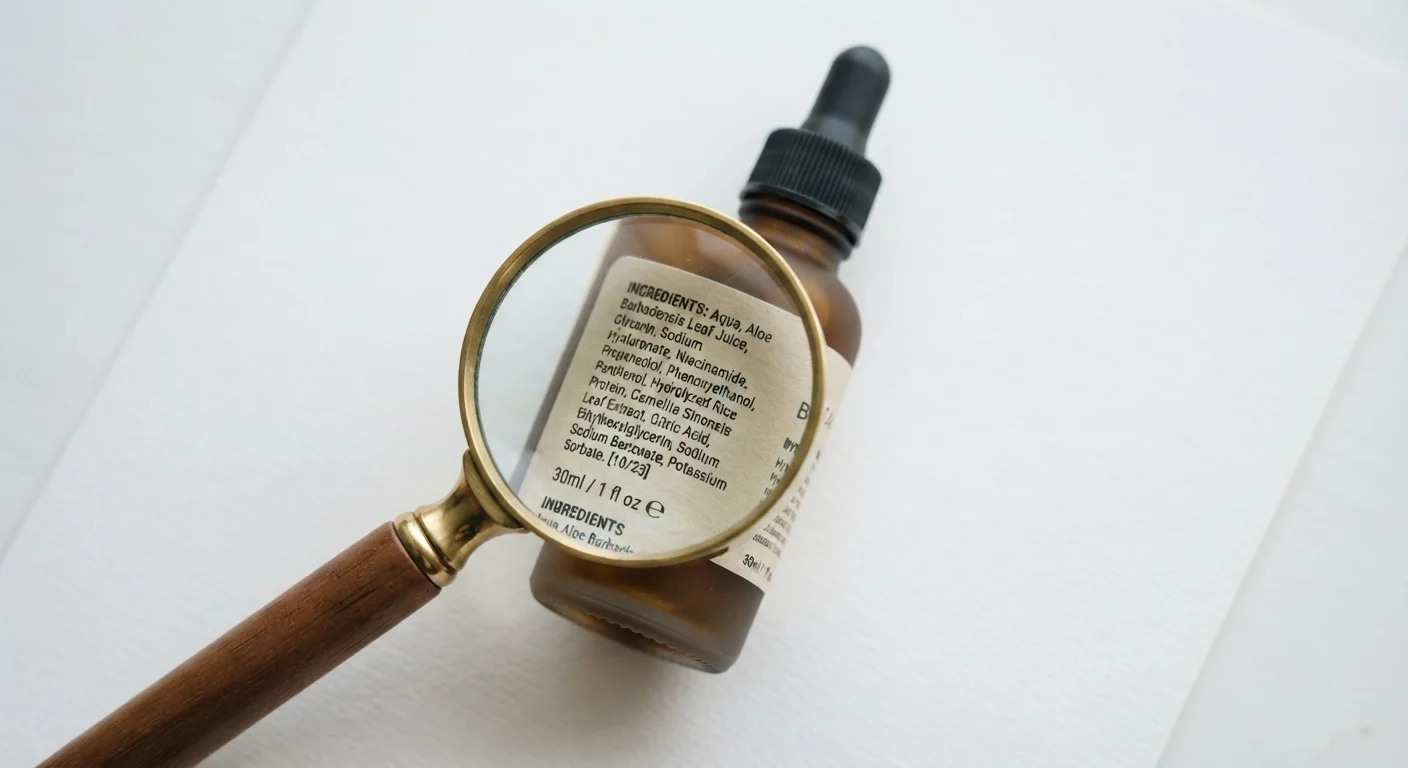
Ingredients must appear in descending order by concentration down to 1%. Below 1%, manufacturers can list them in any order. This means an ingredient appearing near the end of a long list may be present in a very small amount, regardless of how prominently it features in the product's marketing. Understanding that order matters is one of the fastest ways to read past the front-of-package claims.
See how formulation and marketing markups connect for more on what ingredient labels actually reveal about a product's value.
INCI
International Nomenclature of Cosmetic Ingredients. A standardized system for naming cosmetic ingredients using Latin and scientific terms, used on labels worldwide so consumers and professionals can identify the same ingredient across different products and countries.
Emollient
An ingredient that softens and smooths the skin surface by filling spaces between skin cells. Emollients improve texture and reduce flaking without necessarily adding water to the skin.
Occlusive
An ingredient that forms a physical film on the skin surface to reduce water loss through evaporation. Common examples include petrolatum and dimethicone.
Humectant
An ingredient that attracts water from the environment or from deeper skin layers into the outer skin layer. Glycerin and sodium hyaluronate are widely used humectants.
Surfactant
A compound that lowers surface tension between water and oil, allowing them to mix and enabling cleansers to lift debris from skin and hair. Different surfactants vary in how gently they behave at the skin barrier.
Phenoxyethanol
A synthetic preservative used in many cosmetic products to prevent bacterial and fungal growth. It is one of the most common replacements for parabens and is subject to concentration limits under various regulatory frameworks.
Sodium hyaluronate
The sodium salt form of hyaluronic acid, commonly used as a humectant in skincare. Its smaller molecular size compared to full hyaluronic acid allows it to penetrate the outer skin layer more easily.
Parfum / fragrance
A single ingredient declaration on a cosmetic label that can represent a complex mixture of many aromatic compounds. Trade-secret protections mean individual components do not need to be listed, which matters for people with fragrance sensitivities.
The terms you will actually encounter
Several categories of ingredients appear across nearly every personal care product. Recognizing what each category does helps you decide whether a product matches your actual needs.
Emollients and occlusives
Emollients soften skin by filling gaps between skin cells. Common INCI examples include isopropyl myristate, cetyl alcohol, and caprylic/capric triglyceride. Occlusives create a physical barrier to slow water loss; petrolatum (petroleum jelly) and dimethicone are among the most studied. Both are widely available in inexpensive formulations.
Humectants
Humectants draw water into the outer skin layer. Glycerin is the most common, appears in nearly every category of skincare, and costs little to produce. Sodium hyaluronate is the salt form of hyaluronic acid and penetrates slightly better than the full molecule due to smaller particle size. Both function similarly regardless of price point.
Surfactants
Surfactants lift oil and debris from skin and hair. Sodium lauryl sulfate (SLS) is a strong surfactant that some people find drying; sodium laureth sulfate (SLES) is milder. Cocamidopropyl betaine is an amphoteric surfactant often used to moderate the harshness of primary surfactants. None of these terms indicate toxicity on their own; concentration and formulation context determine how they behave on skin.
Preservatives
Preservatives prevent microbial growth in water-containing products. Phenoxyethanol is one of the most common alternatives to parabens and is considered safe at concentrations up to 1% by the European Commission's Scientific Committee on Consumer Safety. Parabens (methylparaben, propylparaben, ethylparaben) remain widely used and have been reviewed by multiple regulatory bodies. Sodium benzoate and potassium sorbate are common in natural-positioned products.
If you are building a routine from scratch, a simple five-step approach can help you apply this label knowledge practically.
Concentration, percentages, and what they mean
| Ingredient listing order rule | Descending concentration down to 1%; any order below 1% (FDA cosmetic labeling regulations) |
| Percentage disclosure required for cosmetics | Not required in the US (cosmetic-only products) (FDA Fair Packaging and Labeling Act) |
| Phenoxyethanol safe-use concentration | Up to 1% (European Commission Scientific Committee on Consumer Safety) |
| Niacinamide studied concentration range | Approximately 2% to 5% (Published cosmetic science and dermatology literature) |
| "Fragrance" declaration coverage | Can represent dozens of individual aromatic compounds (FDA cosmetic ingredient labeling guidance) |
Active ingredients in regulated products such as sunscreens and acne treatments must list their percentage by law in the Drug Facts panel, separate from the cosmetic ingredient list. For cosmetic-only products, no percentage disclosure is required in the US, which is why a serum can claim to contain vitamin C without stating how much.
Commonly cited effective concentration ranges come from published dermatology and cosmetic science literature, not from labels themselves. For example, niacinamide (vitamin B3) has been studied at concentrations generally between 2% and 5% in published research on skin tone and barrier function. Retinoids are measured differently by category: retinol (a cosmetic) and prescription tretinoin are not interchangeable, and their concentrations are not directly comparable.
The 1% threshold in labeling rules also matters for fragrance and essential oils: these can appear anywhere in the bottom portion of a list, and their concentration can still be meaningful for people with sensitivities. "Fragrance" or "parfum" is a single ingredient declaration that may represent dozens of compounds under trade-secret protections.
Use a routine audit checklist to review whether the products you currently use actually contain the ingredients you are paying for.
This article is for general informational purposes only. It is not medical or dermatological advice. If you have a skin condition, sensitivity, or allergy, consult a qualified healthcare professional before changing your skincare routine.