

Key Takeaways
Start here
Why simple routines work
Core knowledge
The five steps and what they actually do
Put it into practice
Building your routine on a budget
Personalize
Adjusting for your skin type
Avoid early pitfalls
Common mistakes to skip from the start
Why simple routines work
Skincare marketing pushes complexity: serums layered on essences, ten-step regimens, and new product categories every season. The skin itself does not need that. It needs its barrier protected, its surface clean, and harmful UV exposure reduced. A routine that does those three things consistently will outperform an elaborate one done sporadically.
Research in dermatology consistently points to the same small group of steps as genuinely effective for most people. Everything beyond those steps is either targeted correction for a specific concern or personal preference. Starting simple means you also spend less, waste less product, and can actually tell what is or is not working on your skin.
Good skin habits connect to overall wellness too. Preventive habits like sleep and hydration shape how your skin looks and behaves just as much as topical products do.
The five steps and what they actually do
Each step in a basic routine has a function. Understanding what that function is helps you choose products with less confusion and less wasted money.
Skin barrier
The outermost layer of skin that holds moisture in and keeps irritants out. Keeping it intact is the main job of a basic skincare routine.
pH
A scale measuring how acidic or alkaline a product is. Skin sits at a slightly acidic pH, and cleansers that match this level are less likely to cause irritation or dryness.
Broad-spectrum SPF
A sunscreen rating that signals protection against both UVA rays (which contribute to skin aging) and UVB rays (which cause sunburn). SPF 30 blocks roughly 97% of UVB rays.
Serum
A lightweight, concentrated product applied before moisturizer. Serums carry a higher dose of active ingredients in a form the skin absorbs quickly.
Ceramides
Lipid molecules that naturally occur in the skin barrier. Products containing ceramides help restore or reinforce the barrier, which is useful for dry or sensitive skin.
Niacinamide
A form of vitamin B3 used in skincare for its ability to reduce the appearance of enlarged pores, uneven skin tone, and excess oiliness. It appears in many affordable products.
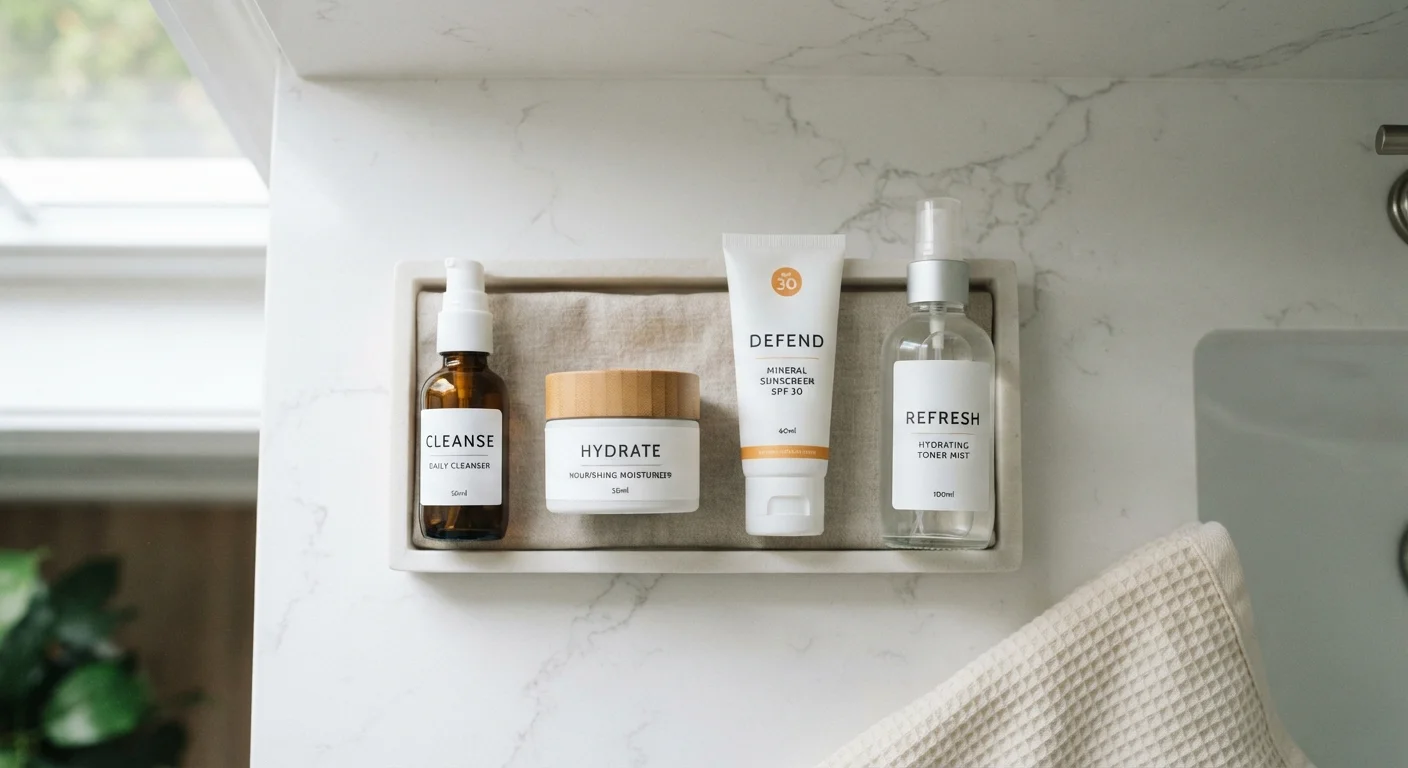
1. Cleanser
Cleansing removes dirt, oil, sweat, and sunscreen residue that accumulates throughout the day. The goal is a clean surface without stripping the skin's natural oils. A gentle, low-pH cleanser does this without disrupting the skin barrier.
2. Toner
Toners originally existed to correct the high pH of old bar soaps. Modern gentle cleansers make that job unnecessary. Today a hydrating toner adds a layer of lightweight moisture and helps the next product absorb. This step is optional but inexpensive and widely useful.
3. Treatment (serum or targeted product)
This is where you address a specific concern: dryness, uneven tone, texture, or breakouts. Serums are concentrated and applied in small amounts before moisturizer. At the beginner stage, one serum targeting your main concern is enough.
4. Moisturizer
Moisturizer seals in hydration and supports the skin barrier. Even oily skin benefits from a lightweight moisturizer because barrier damage leads to more oil production, not less.
5. Sunscreen (morning only)
Broad-spectrum SPF 30 or higher is the single step with the strongest evidence for reducing long-term skin damage. It goes on last in your morning routine, after moisturizer.
Building your routine on a budget
Drugstore shelves carry products with the same active ingredients found in much more expensive options. Reading the ingredient list rather than the marketing copy on the front of a bottle is the practical way to compare value.
A few ingredient names worth knowing: glycerin and hyaluronic acid for hydration, niacinamide for pore appearance and tone, salicylic acid for oily or acne-prone skin, and ceramides for barrier support. These appear in well-priced products across many retailers.
If you want to stretch your budget further, practical techniques for getting more from products you already own can reduce how often you need to repurchase. Correct application amounts matter: most people use more cleanser and moisturizer than they need, which shortens how long a product lasts.
Some households also use common pantry items like oats and honey as supplemental skin care. These have a real role in low-cost routines when used with reasonable expectations and a patch test first.
Adjusting for your skin type
Skin type is not a fixed category. It shifts with seasons, hormones, age, and environment. Still, understanding where your skin generally sits helps you pick the right textures and ingredients.
- Dry skin benefits from cream or balm cleansers, richer moisturizers containing ceramides or shea butter, and avoiding alcohol-heavy toners.
- Oily skin does best with gel or foam cleansers, lightweight oil-free moisturizers, and niacinamide or salicylic acid treatments.
- Combination skin can use a gentle cleanser across the whole face and apply a lighter moisturizer on oily zones and a richer one on dry patches.
- Sensitive skin calls for fragrance-free products, minimal active ingredients to start, and slower introduction of new steps.
If you have a diagnosed skin condition like rosacea, eczema, or severe acne, this general guidance does not replace a dermatologist's recommendations. Consult a qualified healthcare professional for a plan suited to your specific situation.
This article is for general informational purposes only and is not a substitute for professional medical or dermatological advice.
Common mistakes to skip from the start
Patch test every new product
Before applying any new product to your full face, dab a small amount on your inner arm or behind your ear and wait 24 hours. This quick step can save you from a reaction across your whole face. It matters most for products with active ingredients or fragrances.
Starting a routine involves a few habits that consistently cause problems for new skincare users.
Introducing too many products at once. If you add five new products in a week and develop a reaction, you cannot tell what caused it. Add one product at a time and give it a week before the next addition.
Over-cleansing. Washing your face more than twice a day strips protective oils and can trigger more oil production or irritation. Once in the morning and once at night is enough for most people.
Skipping sunscreen on overcast days. UV rays pass through cloud cover. Daily broad-spectrum SPF use is one of the most evidence-backed steps in any routine, regardless of season.
Judging a routine after one week. Skin behaves like a slow feedback system. Four to six weeks of consistent use is the minimum window for an honest assessment.
Once your routine is running smoothly, a periodic check of what you are actually using versus what is sitting unused is worth the few minutes it takes. The monthly routine audit checklist is a practical tool for trimming what is not earning its place in your routine.