

| Fixed expense definition | Same amount every billing cycle, regardless of usage |
| Variable expense definition | Amount changes month to month based on behavior or consumption |
| Most common fixed household cost | Mortgage or rent payment |
| Most commonly underestimated variable category | Groceries and dining out |
| Where budget flexibility lives | Variable expense categories, not fixed ones |
| Tool for irregular but predictable variable costs | Sinking fund (monthly set-aside) |
What fixed expenses are and why they matter
A fixed expense is any cost that stays the same amount every billing cycle regardless of how much you use a service or how the month goes. Your mortgage or rent payment is the clearest example. Whether you spent two weeks at home or traveled for half the month, that figure does not change. The same logic applies to car loan payments, most insurance premiums, and many subscription plans with a flat monthly rate.
Fixed costs matter in budgeting because they are the floor of your spending. Before you decide anything else, that money is already spoken for. When families know their total fixed obligations, they can see exactly how much income is genuinely available for everything else.
Common fixed expenses for American households include:
- Mortgage or rent
- Car loan payments
- Homeowners or renters insurance
- Health insurance premiums (when paid separately from payroll)
- Student loan payments on a standard repayment plan
- Fixed-rate internet or phone plan fees
This article is for general informational purposes and is not personalized financial advice. For decisions specific to your household, consult a qualified financial professional.
What variable expenses are and where they trip people up
Variable expenses change from month to month based on your behavior, consumption, or circumstances. Groceries are the most familiar example: a family of four might spend $650 one month and $810 the next, depending on what is on sale, who is visiting, and whether anyone stocked up on pantry staples.
Variable costs are where most budget plans develop cracks. They feel controllable because they respond to choices, but that also means they expand quietly when habits drift. Spending patterns that quietly undermine a family's financial comfort are almost always rooted in variable categories that were never tracked consistently.
Fixed expense
A recurring cost that does not change in amount from one billing period to the next, regardless of usage or behavior. Mortgage payments and flat-rate insurance premiums are typical examples.
Variable expense
A cost that fluctuates month to month based on consumption, behavior, or circumstances. Grocery bills and utility costs driven by usage fall into this category.
Discretionary spending
Variable expenses that are not essential to basic household function, such as dining out, entertainment, or clothing beyond basics. These are the most flexible part of a budget.
Sinking fund
A savings method where a household sets aside a fixed amount each month to cover a known future expense, converting an irregular cost into a predictable one.
Common variable expenses include:
- Groceries and household supplies
- Gas and transportation costs beyond a fixed car payment
- Utilities (electricity, water, gas) where usage drives the bill
- Dining out and takeout
- Clothing and personal care
- Entertainment and recreation
- Out-of-pocket medical costs
Some variable expenses are predictable in timing but not in amount, like an annual car registration or a seasonal heating bill spike. A sinking fund is a practical tool for smoothing out those lumpy costs over several months.
How the distinction shapes your budgeting approach
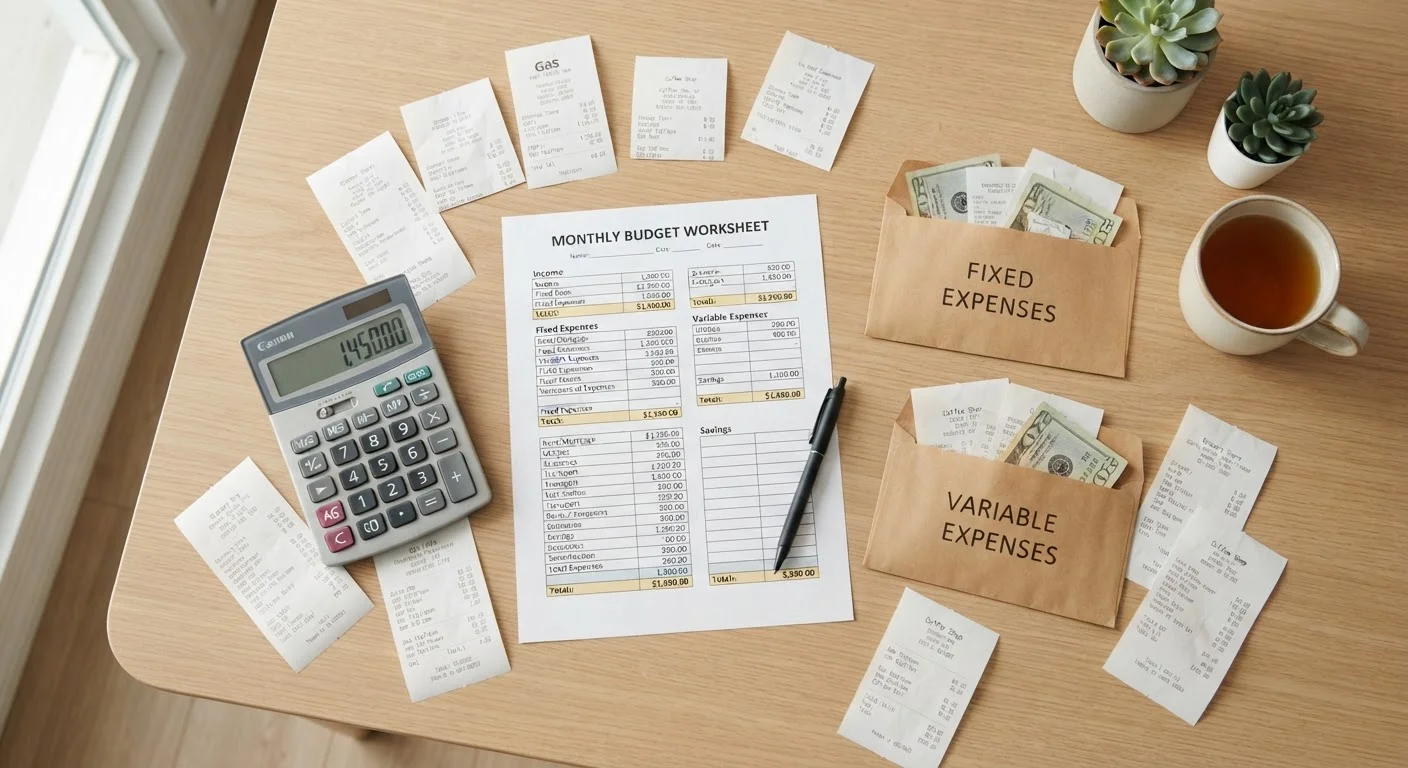
Once a household separates fixed from variable spending, two things become clearer. First, you can calculate with confidence how much income is committed before the month begins. Second, you can see where flexibility actually exists, which is almost always in the variable column.
| Fixed expense definition | Same amount every billing cycle, regardless of usage |
| Variable expense definition | Amount changes month to month based on behavior or consumption |
| Most common fixed household cost | Mortgage or rent payment |
| Most commonly underestimated variable category | Groceries and dining out |
| Where budget flexibility lives | Variable expense categories, not fixed ones |
| Tool for irregular but predictable variable costs | Sinking fund (monthly set-aside) |
Budgeting frameworks handle the two categories differently. The 50/30/20 rule, for instance, groups fixed necessities and variable necessities together in the 50 percent needs bucket, which can obscure how rigid your floor really is. Envelope budgeting, by contrast, tends to assign separate envelopes to variable categories precisely because those are the ones that need active management. Comparing those two methods side by side helps families see which structure suits their spending patterns.
A monthly budget checklist is a useful way to apply this distinction in practice. A practical monthly budget checklist for American households walks through how to log fixed obligations first, then allocate toward variable categories with whatever remains after savings contributions.
For households that own a home, variable costs also show up in maintenance and repairs. Treating those as unpredictable emergencies rather than expected variable spending is one reason home budgets go off track. Keeping a home repair and improvement budget that actually works reduces that friction considerably.