

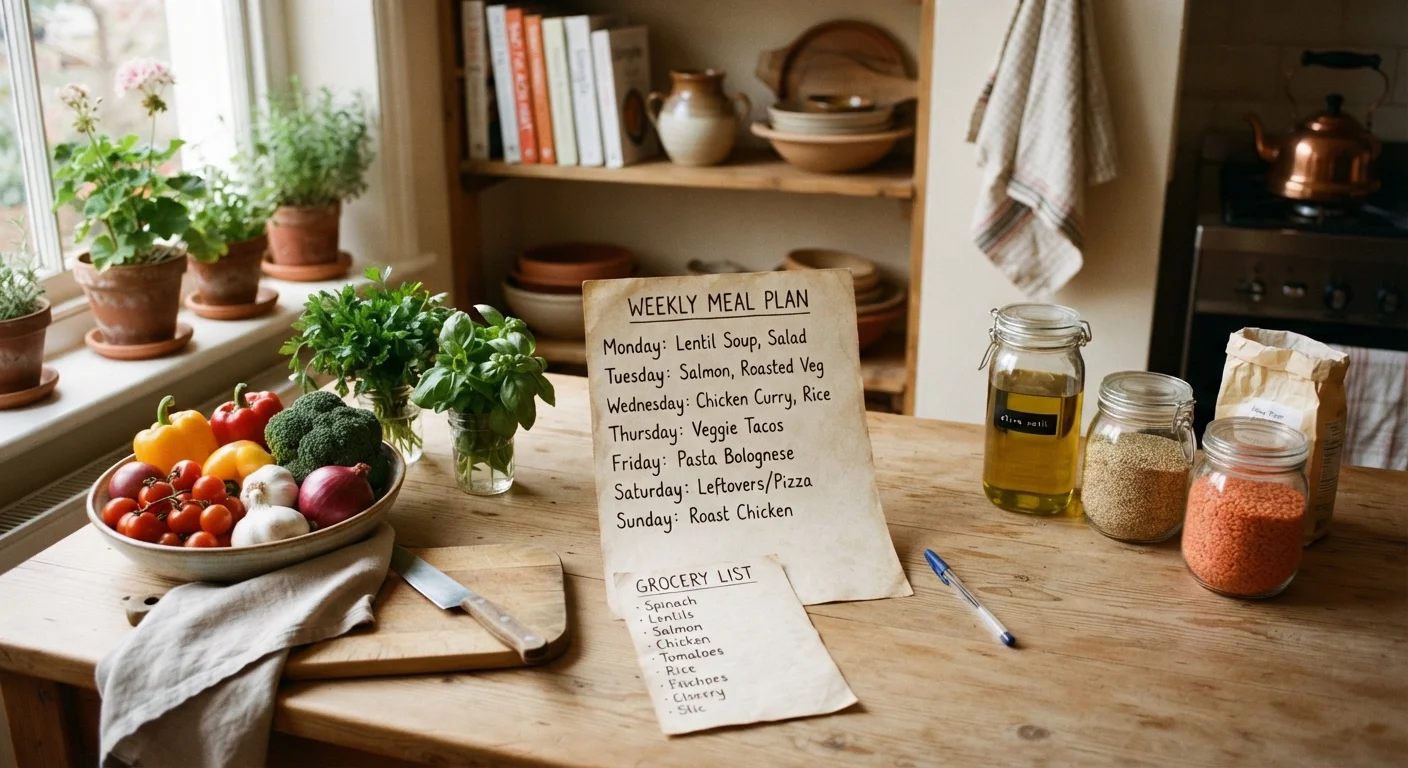
Key Takeaways
Why most family meal plans fail within a week
The most common meal planning failure is not laziness. It is a plan that was built without looking at the schedule, the pantry, or the store prices first. Families write out seven dinners on Sunday, shop for all of them, and by Tuesday a busy evening or an unexpected obligation knocks the plan sideways. The ingredients sit, some go bad, and the budget takes a hit from both the wasted food and the unplanned dinner out.
A plan that works starts narrower. It accounts for what you already own, what is realistically priced that week, and how much cooking time you actually have on each day. That kind of plan holds together under real conditions.
If you have never meal planned before and want a full walkthrough of the process, the first-timer's roadmap to weekly budget cooking covers the full process from recipe selection to shopping.
Your plan does not need to be perfect
A meal plan that accounts for five out of seven dinners is far more effective than one that tries to script every meal and collapses when life interrupts. Build in flexibility from the start so the plan survives the week intact. The goal is fewer unplanned purchases, not a rigid schedule.
What this approach costs and saves
Meal planning does not produce identical results for every household, and any specific savings figure depends on your current habits, family size, and where you shop. What the general pattern shows is that unplanned grocery trips and last-minute decisions tend to cost more, not because of any single purchase but because of cumulative small choices made without a reference point. A plain-language look at what drives family food budgets can help you understand where your own household's biggest spending categories tend to sit before you start planning.
The steps below work together as a system. Skipping the pantry check or the circular review weakens the result. Following the full sequence, even roughly, tends to bring the plan into contact with reality rather than with wishful thinking.
What you will need
Step-by-step: building the plan
Follow these steps in order once a week, ideally a day or two before you shop. Each step builds on the one before it.
Take stock of what you already have
Before writing a single meal idea, check the freezer, fridge, and pantry. Pull items that are close to their use-by date to the front. Write down proteins, grains, canned goods, and vegetables that are already paid for. These become the anchors of your plan for the week.
Check this week's store circular
Look at what proteins and produce are discounted before you decide on recipes. If chicken thighs are marked down, plan two or three meals around them. If a particular vegetable is in season and priced low, work it into multiple dinners. This habit alone tends to move the grocery bill noticeably, because you are letting prices guide the menu rather than letting the menu drive you to full-price purchases.
Choose a small rotation of flexible recipes
Pick five to six recipes your family already accepts, with at least one or two that use interchangeable proteins or vegetables. A stir-fry works with chicken, pork, or tofu. A grain bowl accepts almost any roasted vegetable. Flexible formats mean you can swap in whatever is on sale without anyone noticing much difference at the table.
For meal ideas that fit this format, sheet pan dinners are worth adding to the rotation since they require minimal prep and adapt easily to whatever produce is available.
Assign meals to days with real life in mind
Look at the week's schedule before placing meals. A Wednesday with a late practice or long meeting is not the night for a recipe that takes an hour. Put faster meals on busy days and save longer cooks for weekends or days with open evenings. Always reserve one night as a flexible slot for leftovers or a simple pantry meal. That slot acts as a buffer so that a schedule disruption does not turn into an unplanned takeout expense.
Build the grocery list from the plan
Go through each planned meal and write down exactly what you need, subtracting anything already at home. Group the list by store section (produce, meat, dairy, dry goods) to avoid backtracking and reduce the chance of impulse additions. Set a target dollar amount before you walk in.
For a thorough pre-trip checklist, the weekly budget-shopping checklist covers unit price checks and store navigation tactics worth reviewing.
Schedule one batch-cooking window
Pick a time, often Sunday or another day off, to prep components that appear in multiple meals. Cook a large pot of grains. Roast a tray of vegetables. Brown a larger portion of ground meat than you need for one dinner. These ready-made components compress weeknight cooking to 15 or 20 minutes and remove the temptation to abandon the plan when you are tired and short on time.
Keeping the plan going past week one
The first week of meal planning takes the most time because everything is new. By the third or fourth week, the pantry check is faster, the circular scan is familiar, and the rotating recipe list is already in your head. The habit becomes lighter, not heavier, with practice.
When a week falls apart, the fix is simple: note which meal did not happen, move it to the following week if the ingredients are still good, and adjust the next plan to include one fewer ambitious recipe. A running list of meals your family accepted without complaint is worth keeping. Over time, that list becomes a ready-made rotation you can draw from without much thought.
For a broader look at how intentional choices in one area of family life connect to others, building a family wellness routine follows a similar structured approach that fits alongside meal planning without adding significant time.
Meal planning is general household management, not a financial or nutritional prescription. Consult a registered dietitian or qualified financial professional for guidance specific to your family's health or budget situation.