

Key Takeaways
Start here
Why meal planning works for budget cooking
Next
Setting a realistic weekly food budget
Then
Choosing recipes that stretch ingredients
When you're ready
Building your first weekly meal plan
Final step
Turning your plan into a grocery list
Why meal planning works for budget cooking
Unplanned grocery trips cost more. Without a list tied to specific meals, most shoppers fill their cart with items that look appealing or feel like a good idea in the moment. Many of those items go unused. The USDA has estimated that American households waste a significant share of the food they buy, and impulse purchases are a major contributor to that waste.
Meal planning addresses this directly. When you know exactly what you are cooking Monday through Sunday, you only buy what those meals require. Nothing extra sits in the refrigerator until it goes bad. Understanding how grocery costs actually break down can make it easier to see where a plan saves the most money.
Planning also reduces the cost of last-minute decisions. When there is no plan and no groceries for tonight's dinner, takeout or convenience food fills the gap. Both cost more per serving than a home-cooked meal made from a stocked pantry.
Setting a realistic weekly food budget
Before picking a single recipe, decide how much you plan to spend. A number on paper makes every subsequent decision simpler. The USDA publishes monthly food cost reports with four spending tiers: thrifty, low-cost, moderate-cost, and liberal. These figures are broken down by household size and age, and they give a useful starting benchmark even if your actual target differs.
Write down what you spent on groceries last month, divide by four, and compare that to the USDA thrifty or low-cost plan for your household size. The gap between those two numbers is your opportunity. Most families find meaningful room to reduce spending without reducing nutrition when they shift from unplanned shopping to planned shopping.
Ingredient overlap planning
Choosing recipes that share the same ingredients so that a single purchase gets used across multiple meals in the same week, reducing waste and total spending.
USDA food cost tiers
Monthly spending benchmarks published by the U.S. Department of Agriculture that estimate how much it costs to feed a household at four different spending levels, from thrifty to liberal.
Unit price
The cost per ounce, pound, or other standard measure of a product. Comparing unit prices rather than package prices shows which size or brand gives you more for your money.
Pantry staples
Shelf-stable ingredients such as dried beans, rice, pasta, and canned tomatoes that keep for weeks or months and can form the base of many low-cost meals.
Leftover night
A planned slot in the weekly meal schedule where the household eats food cooked earlier in the week, which reduces cooking time and food waste without extra cost.
Your budget figure also shapes how many meals you plan around proteins like meat or fish versus plant-based proteins like beans and lentils. Protein is often the most expensive line item in a grocery cart, and adjusting its frequency is one of the fastest ways to bring spending down.
Choosing recipes that stretch ingredients
The most cost-effective recipes share ingredients across multiple meals in the same week. If you buy a head of cabbage for a stir-fry on Wednesday, plan a slaw or a soup that uses the rest before it wilts. This overlap is called ingredient overlap planning, and it is one of the most practical habits a beginner can build.
A well-stocked pantry reduces how much you need to buy each week. Dried beans, rice, pasta, canned tomatoes, oats, and cooking oil appear across dozens of recipes. When these items are already at home, the weekly shopping list shrinks to fresh produce, dairy, and whatever protein you need.
Simple formats like soups, grain bowls, and sheet pan meals work well for budget cooking because they are forgiving with quantities and easy to scale. Sheet pan dinners in particular keep ingredient counts low and make it easy to use whatever vegetables are on hand or on sale.
Building your first weekly meal plan
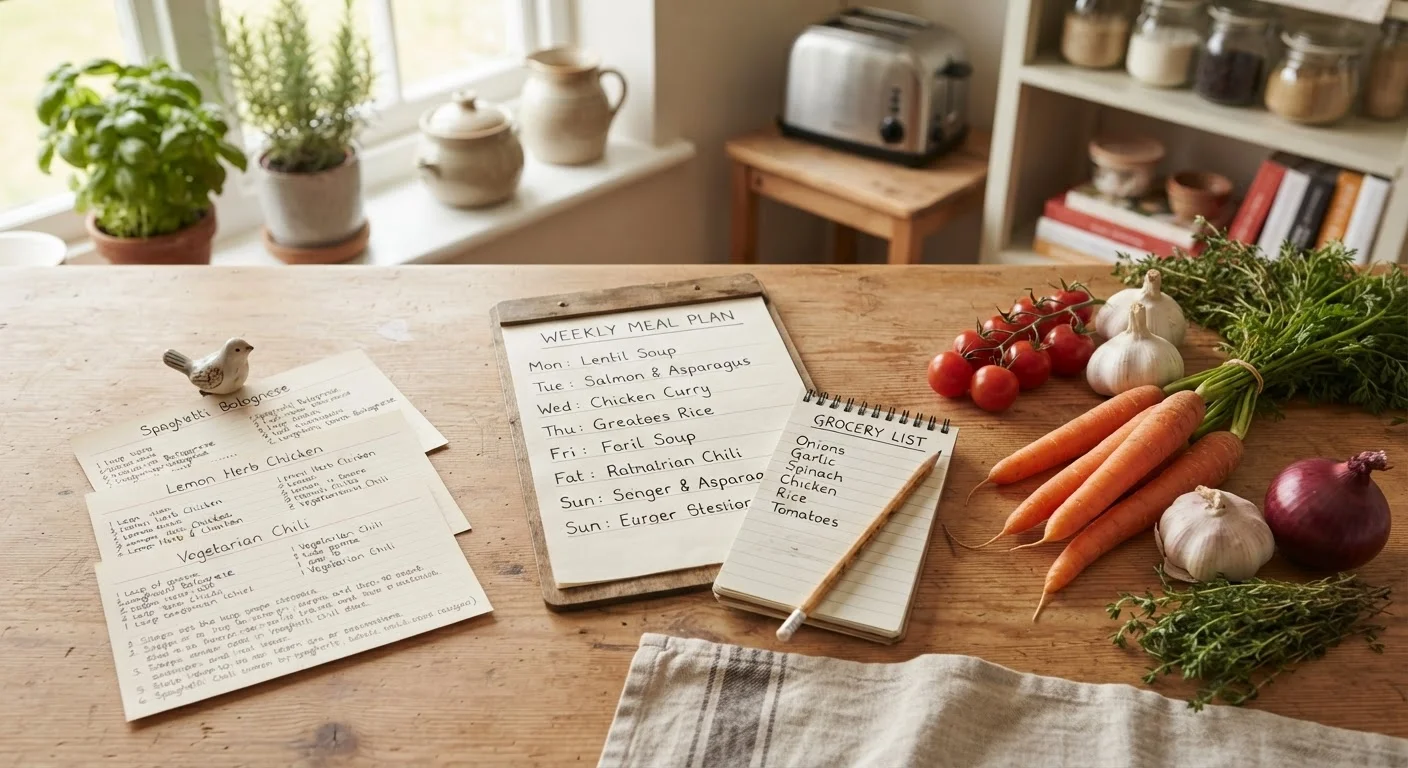
Start with a blank seven-day grid. Fill in any nights that are already decided, such as a standing family dinner or a night you know will be too busy for cooking. Those slots get your simplest meals or planned leftovers.
For the remaining nights, choose three to five recipes. Repeating a meal mid-week or having a planned leftover night reduces the number of distinct recipes you need without reducing variety. Most families do not actually eat seven completely different dinners each week, so building that expectation into your plan makes it more realistic.
Check what you already have at home before finalizing recipes. Cooking from what is already in the pantry or freezer is the fastest way to reduce this week's grocery bill. A pre-shopping checklist helps make sure you do not buy duplicates of items you already own.
Start with meals your family already likes
Your first meal plan does not need any new recipes at all. Writing down five dinners your household already enjoys and shopping specifically for those is a complete, working meal plan. You can add variety gradually once the weekly rhythm feels natural.
Turning your plan into a grocery list
Once your meals are set, write out every ingredient each recipe needs. Then cross off anything you already have at home. What remains is your grocery list.
Organize the list by store section: produce, dairy, meat, dry goods, canned goods. This keeps the shopping trip efficient and reduces the chance of backtracking through the store, which tends to lead to extra items landing in the cart.
Check unit prices rather than package prices. A larger bag of rice almost always costs less per ounce than a smaller one, and rice stores well. The same logic applies to dried beans, oats, and other shelf-stable staples. This one habit can reduce the cost of staple purchases by a noticeable amount over a month.
Common first-timer mistakes to avoid
Planning too many new recipes in one week is the most common early mistake. New recipes take longer to cook and have a higher chance of flopping. Limit new dishes to one per week and keep the rest familiar.
Overbuying fresh produce is the second most common problem. Fresh vegetables and fruit have short windows, and buying more than your plan calls for leads to waste. Buy only what specific meals require, and keep a bag of frozen vegetables in reserve for nights when fresh produce runs out before the week ends.
The third mistake is skipping the inventory check before shopping. Without knowing what is already at home, it is easy to buy a second onion, another can of diced tomatoes, or more pasta than the pantry can hold. A few minutes at home before writing the list prevents this. For families trying to connect better eating habits with overall wellness, building simple routines around food and movement can reinforce the same planning habits used here.