

Key Takeaways
Why rituals matter more than events
Families often assume that meaningful time together requires money: a trip, a theme park, a restaurant meal. Research in developmental psychology consistently finds otherwise. It is the repeated, predictable moments, a Saturday morning walk, a weekly game night, a shared cooking session, that children remember and that reduce stress for adults too. These rituals work because they are reliable. Everyone knows what is coming, and that predictability itself is calming.
The weekend is the easiest place to build them. There is more flexibility than on school nights, and the lower pressure means families can actually be present instead of just nearby. The rituals below are grounded, low-cost, and genuinely used by families across the country. None require a subscription, a special venue, or a large budget.
A standing outdoor walk with no destination required
Pick a time, Saturday at 9 a.m. for example, and walk together every week. The route can change. The point is the habit. Walking side by side lowers the social pressure of direct conversation, which is exactly why kids and teenagers often open up more on a walk than at a dinner table. Public trails, neighborhood streets, and local parks cost nothing to use. For families interested in how movement connects to broader wellness, preventive health habits that cost almost nothing covers how consistent low-intensity activity supports long-term health.
Walking side by side lowers the social pressure of direct conversation, so kids open up more.
A weekly family cook night with rotating chefs
Choose one weekend meal where everyone has a job. Younger children wash vegetables or stir; older kids handle a full component. The meal does not have to be elaborate. Simple formats like sheet pan dinners keep ingredient costs low and cleanup short. The sheet pan dinner approach is one practical starting point. Cooking together teaches practical skills, builds confidence in children, and produces a meal the family genuinely had a hand in making.
Children who cook a meal are more likely to eat it and remember making it.
Library visits as a weekly anchor
Public libraries offer far more than books. Most branches run free weekend programs for children, including story hours, craft sessions, STEM workshops, and summer reading challenges. Adults benefit too: audiobooks, digital magazine access, and community event boards are standard at most US library systems. A standing Saturday morning library trip costs nothing and exposes children to a range of ideas and interests they might not encounter at home. It also models the habit of learning for its own sake.
Most US public libraries run free weekend programs that families rarely know exist.
A no-screens family game hour
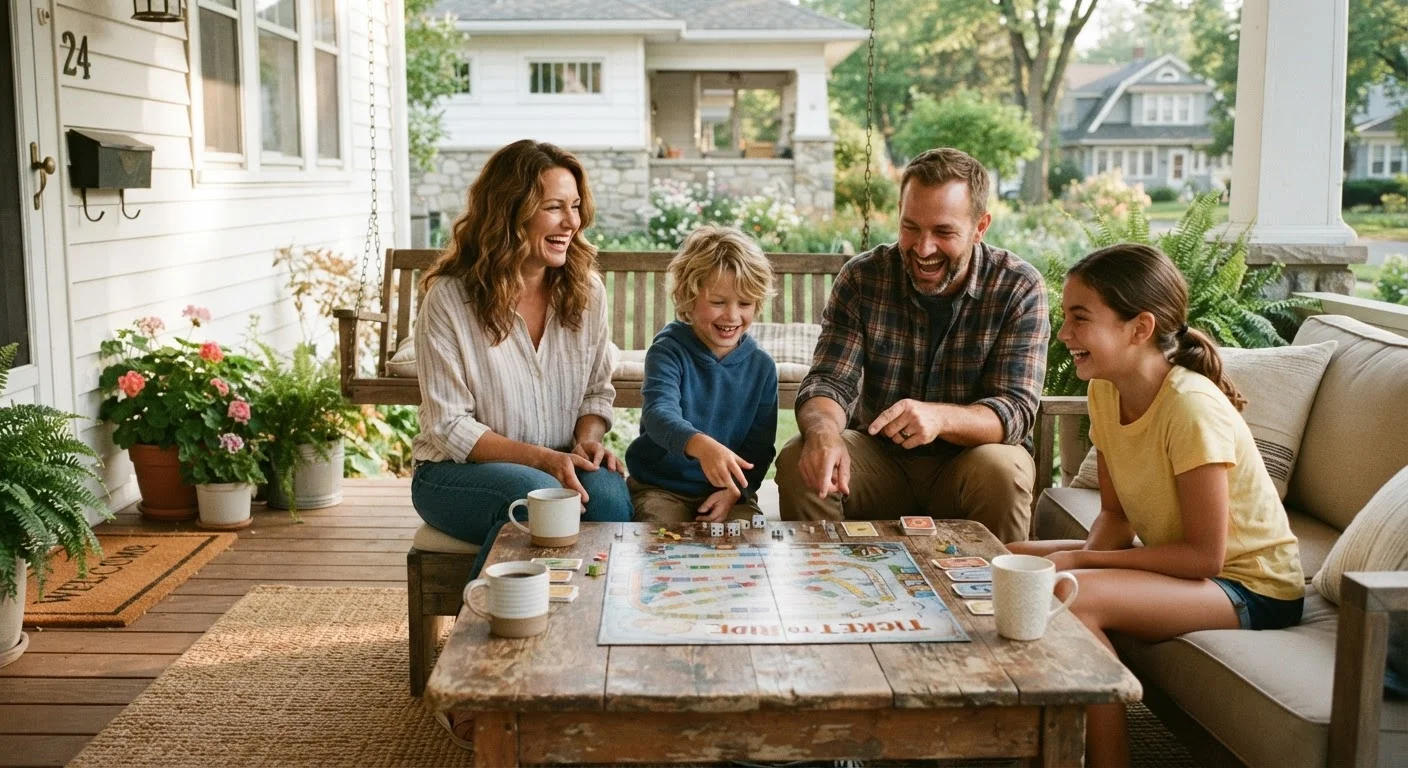
A single hour with a board game, card game, or even a physical outdoor game like frisbee does more for connection than passive screen time because it demands real-time interaction. Laughter, mild competition, and shared attention all show up in ways that watching a show together does not produce at the same level. Games do not need to be new: thrift stores regularly carry board games in good condition for a dollar or two, and many classics require nothing beyond a standard deck of cards. For families curious about how habits like this fit into mental wellness, free and low-cost mental health resources for families is a useful companion read.
One hour of interactive play produces more genuine connection than passive screen time.
A simple creative project with whatever is on hand
Drawing, building with scrap cardboard, writing a short story, or starting a household garden patch from seed packets are all low-cost creative outlets that work across ages. The goal is not a finished product but the time spent making something together. Families can keep a small supply box, paper, tape, markers, and basic craft supplies, replenished gradually at dollar stores or with recycled materials. Rotating who picks the project keeps it from feeling one-sided. Affordable self-care practices backed by research notes that creative activity is consistently associated with reduced stress in adults and children alike.
The goal of a creative project is the time spent making, not the quality of the result.
A slow Sunday breakfast eaten together at the table
Weekday mornings are rushed. Sunday breakfast is one of the few natural windows for an unhurried family meal. It does not require an elaborate menu: eggs, toast, fruit, and coffee are enough. What matters is that phones stay off the table and the meal runs long enough for actual conversation to develop. Families that eat together regularly report stronger communication and, according to family researchers at institutions like the University of Minnesota, children in those households tend to show higher academic performance and lower rates of risky behavior. The mechanism is straightforward: regular shared meals create predictable space for talking.
An unhurried Sunday breakfast gives conversation the time it needs to actually develop.
Making it stick
Rituals fade when they feel like obligations. The fix is simple: let each family member rotate a small role. One person picks the Saturday morning activity, another chooses the recipe for the family cook night. Ownership keeps participation voluntary and genuine.
If your family is starting from scratch, pick one ritual from this list and run it for four consecutive weekends before deciding whether it fits. One consistent habit is more useful than five that rotate in and out. For ideas on how these habits connect to broader family health, see building a family wellness routine without fancy equipment or explore how a home environment built on intention rather than spending can support these same goals. If weekend spending habits are quietly undercutting your family's budget elsewhere, spending patterns that quietly undermine a family's financial comfort is worth a read.
Start with one ritual, not six
Trying to implement several new routines at once usually means none of them stick. Choose the single ritual that fits your family's current schedule most naturally and repeat it for a month before adding anything else. Once it feels automatic, a second habit is much easier to layer in.