

Key Takeaways
What abundance actually means in a home
Abundance at home is rarely about square footage or new furniture. Most families who describe their homes as comfortable and welcoming point to things that cost little: enough light, surfaces that aren't cluttered, a kitchen that smells good, rooms that are quiet enough to think in. These are conditions, and conditions can be shaped without much money.
The challenge is that consumer culture conflates abundance with accumulation. More stuff, newer appliances, and decorator touches are presented as the path to a home that feels full. In practice, the opposite often holds. A home crowded with things bought to fill emotional gaps tends to feel less restful, not more. The intentional spending framework that many families now use starts with a similar insight: what you choose not to bring in matters as much as what you choose to keep.
Practices that make a real difference
The following practices are grounded in what families with modest budgets consistently report as effective. None require a renovation or a shopping trip.
Declutter one area at a time before buying anything new for that space.
A room with fewer things in it almost always looks and feels larger. Removing items that aren't used also makes cleaning faster, which means the space stays presentable with less effort. This one step changes perception of a home more reliably than any purchase.
Use natural light as a primary design element in every room.
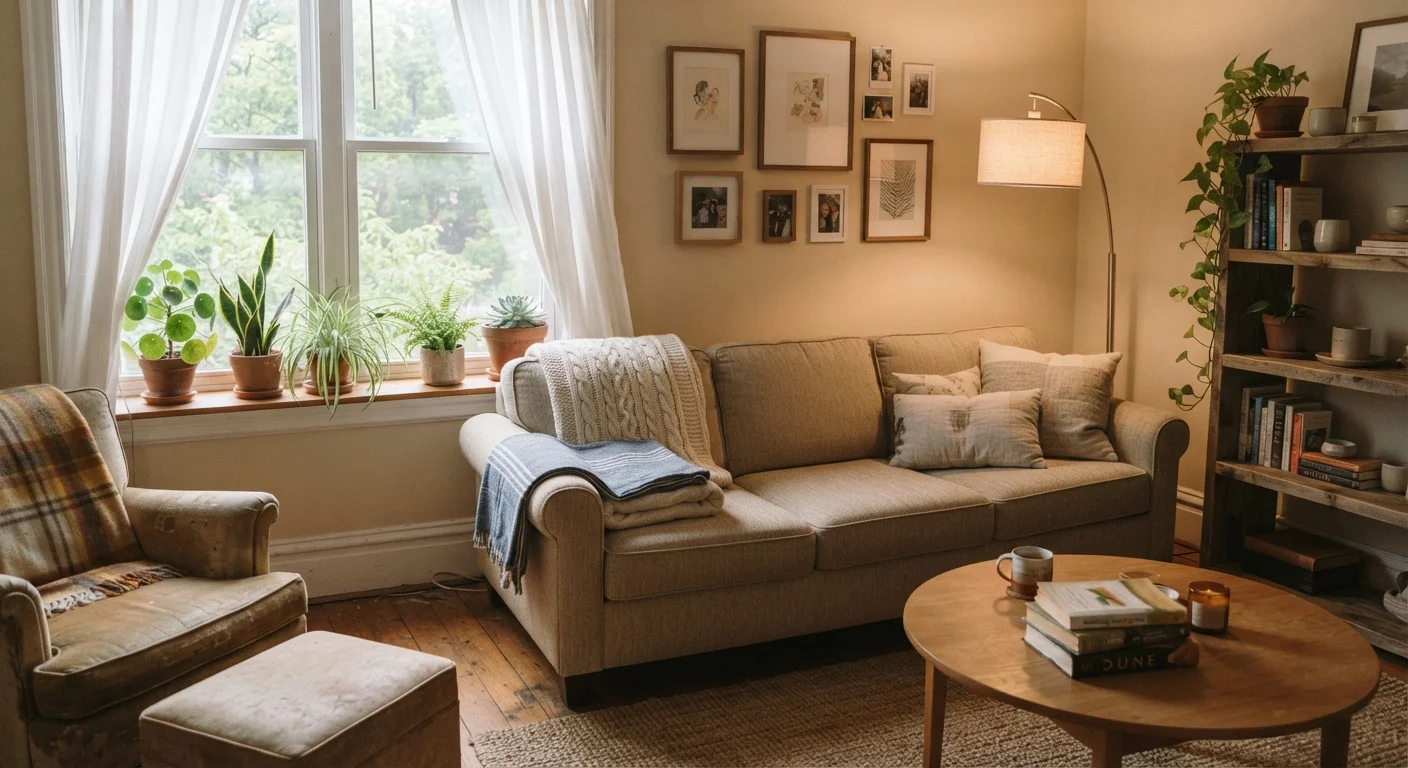
Light affects mood, perceived space, and energy costs all at once. Keeping windows clean, trimming outdoor growth that blocks light, and choosing lighter window treatments are free or very low-cost changes that consistently make rooms feel more open.
Establish a weekly reset routine so the home returns to a comfortable baseline.
Clutter accumulates between deep cleans, and a home that feels perpetually messy drains energy even when it isn't objectively dirty. A short weekly reset, 20 to 30 minutes of returning things to their places, keeps the baseline high without heroic effort.
Repurpose furniture and objects before replacing them.
Moving a piece of furniture to a different room, repainting a storage item, or using a basket from one area in another costs nothing or close to nothing. These small repositions genuinely refresh how a space feels and extend the useful life of what you own.
Bring in living things: plants, herbs, or cut branches from outdoors.
Living greenery changes the texture of a room in a way that photographs and decorative objects rarely do. Many common houseplants are inexpensive and hardy. Growing herbs on a windowsill adds both visual life and practical use.
Create one or two consistent sensory anchors in shared spaces.
Scent, sound, and texture contribute to how a home feels, often more than visual appearance. A familiar smell from a candle, a soap, or something cooking cues relaxation. Soft textiles in seating areas add warmth without furniture changes.
For families thinking about where targeted spending does pay off, the small home upgrades guide covers low-cost improvements that produce noticeable results in comfort and household costs.
Starting today
None of these changes require waiting for a better financial moment. The actions below are genuinely immediate and carry real impact on how a home feels day to day.
Tracking what you spend on the home over time also helps you stay in control. The home repair and improvement budget guide walks through how families keep that picture clear without constant financial stress. And if certain habits have been quietly working against your household budget, spending patterns to watch for is worth a read alongside this one.