

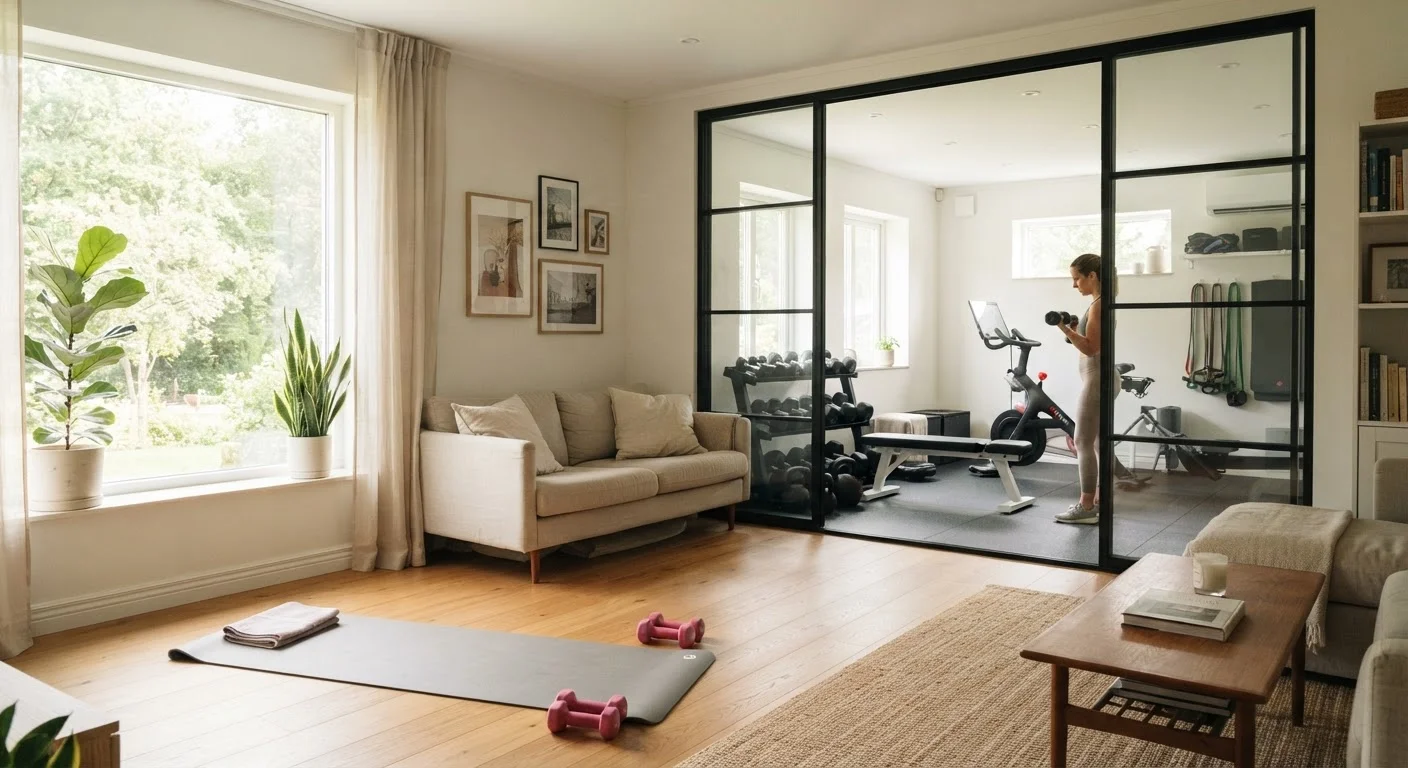
Key Takeaways
Option A
Gym Membership
The structured, equipment-rich option for committed exercisers.
Best for: Families where one or two adults want access to a wide range of machines, group classes, or swimming pools.
Option B
Home Workouts
The flexible, low-overhead alternative that scales with the whole family.
Best for: Households with limited schedules, young children, or a preference for exercising without a recurring monthly cost.
If your budget is tight and you have more than two people in the household
Home Workouts
Per-person gym costs multiply fast for families. Free video resources and basic equipment at home remove the monthly overhead entirely.
If you want access to a pool, specific machines, or supervised group classes
Gym Membership
Some fitness goals genuinely require equipment or instruction that is hard to replicate at home. A single-person membership can make sense if the facility is used consistently.
If motivation and structure are your biggest barriers to exercise
Gym Membership
A paid commitment and a scheduled class can create accountability that free home routines sometimes lack, particularly for adults returning to exercise.
If childcare logistics make leaving home difficult
Home Workouts
Home routines eliminate travel time and childcare costs, which are real barriers for parents of young children.
If you want to try fitness without a long-term financial commitment
Home Workouts
Starting at home costs little to nothing and lets you build a consistent habit before deciding whether a paid facility adds genuine value.
What gym memberships actually cost a family
The advertised rate for a gym membership rarely reflects what a family pays. Budget chains often list individual memberships at around $10 to $25 per month, while mid-range facilities run $40 to $80 per person. Multiply that by two adults and the annual figure reaches $960 to $1,920 before any extras.
Initiation fees are common, sometimes $50 to $100 per member. Many gyms offer childcare for an additional fee, often $5 to $10 per visit. Group fitness classes, towel service, and locker rentals are sometimes separate line items. Families who use these add-ons regularly can find the real monthly cost is 30 to 50 percent higher than the base rate.
YMCA memberships work differently. A household membership at many YMCA branches covers the whole family for roughly $60 to $100 per month, with access to pools, courts, and childcare included. For families with children, the YMCA model is worth comparing directly against a per-person commercial gym rate. See common wellness spending myths for more on where families tend to overestimate value.
| Criterion | Gym Membership | Home Workouts |
|---|---|---|
| Monthly cost (per adult) | $20 to $80+ | $0 to $5 (amortized gear) |
| Family of four annual cost (estimate) | $960 to $3,800+ | $100 to $300 one-time setup |
| Equipment access | Machines, pools, free weights | Bodyweight or basic gear |
| Schedule flexibility | Limited by hours and travel | Any time, any day |
| Childcare requirement | Often needed (extra cost) | Not required |
| Motivation structure | Classes, staff, social setting | Self-directed |
| Startup barrier | Contract or initiation fee | Minimal to none |
The real cost of working out at home
Home workouts have a different cost structure. The starting point can be zero dollars. Bodyweight routines covering push-ups, squats, lunges, and planks require no equipment and are well-documented through free YouTube channels, government health resources, and public library apps like Libby.
Adding a resistance band set ($15 to $30) and a pair of adjustable dumbbells ($40 to $100 depending on weight range) gives most adults a functional strength training setup. A yoga mat costs $20 to $40. These are one-time purchases, not recurring monthly charges.
The ongoing cost of home workouts is essentially internet access, which most households already have. Free platforms such as the National Institutes of Health's MedlinePlus fitness section and YouTube channels from accredited fitness trainers provide structured programming at no charge.
Space is a genuine constraint for some households. Apartment living, shared rooms, and young children underfoot can make consistent home exercise harder than the low dollar cost suggests. This is a practical factor worth weighing honestly before assuming home is the cheaper-and-better choice.
Starting a wellness habit when time and money are both tight covers realistic options for families navigating exactly these constraints.
$58
Average monthly US gym membership cost
According to a fitness industry analysis by RunRepeat covering data from major US gym chains, the average individual membership runs approximately $58 per month.
$0
Minimum cost to start a home workout routine
Bodyweight exercise programs require no equipment and free structured plans are available through public health resources and library apps across the US.
67%
Gym members who report rarely using their membership
A Statista consumer survey found that a majority of gym members use their membership far less than planned, a pattern that significantly raises the effective per-session cost.
Where each option tends to break down
Gym memberships lose value quickly when attendance drops. A $50-per-month membership used twice a week costs roughly $6 per session. Used twice a month, it costs $25 per session. The financial case for a gym depends almost entirely on frequency, and frequency depends on logistics: drive time, parking, work schedules, and childcare availability all affect how often a membership actually gets used.
Home workouts have a different failure mode. Without external structure, many people find motivation harder to sustain. A living room is also a workspace, a play area, and a relaxation space. Mentally separating it into a fitness zone takes deliberate effort. For some adults, the act of going somewhere specifically to exercise is the habit-forming cue that keeps them consistent.
Neither failure mode is fixed. Choosing a gym close to home or work reduces the friction that kills attendance. Setting a specific home workout time and treating it as a non-negotiable appointment addresses the motivation problem without spending money. The approach that fits your family's daily routine is the one most likely to produce consistent movement, which is the actual goal. For a broader look at spending decisions like this one, buying less versus buying better walks through how to weigh one-time versus ongoing costs for household decisions.
A practical way to decide
Track two numbers before committing to either path. First, how many days per week can your household realistically exercise, accounting for work, school, and caregiving? Second, what is the per-session cost at each option, including travel time valued at whatever your time is worth to you?
If a gym session costs $8 in membership fees plus $4 in gas and 30 minutes of round-trip driving, and you make it twice a week, that is a real expenditure. If a home workout costs nothing and happens four mornings a week before the house wakes up, the financial and consistency math favors home.
Some families use a hybrid model: one adult holds a single gym membership for heavier lifting or swimming while the rest of the household uses free home routines. Others take a seasonal approach, purchasing a shorter-term gym pass during winter months when outdoor activity drops and reverting to home workouts the rest of the year. These are legitimate structures, not compromises.
This article provides general information for educational purposes only and is not medical or fitness advice. Consult a qualified healthcare provider before starting a new exercise program, particularly if you have existing health conditions.