

Key Takeaways
Why protein is often where grocery budgets break
Protein is usually the most expensive line item in a family's grocery cart, and for good reason: the cuts of meat that most households default to, such as boneless chicken breast, ground beef, or pork chops, can cost two to five times more per pound than comparable non-meat sources. When protein costs rise, families tend to either reduce the total amount of protein they eat or cut spending elsewhere in the cart, often on produce or whole grains.
There is another path. Several proteins are consistently priced well below common meat cuts, hold up in a wide range of cooking styles, and carry nutritional profiles that rival or exceed their pricier counterparts. This list covers the ones that show up reliably at that lower price point in U.S. grocery stores, along with practical notes on how to use them. For a broader look at how food budgets actually work, see what the numbers actually look like.
Eggs
A dozen eggs typically costs less than a pound of ground beef, yet a single large egg contains about 6 grams of protein along with all nine essential amino acids, vitamin B12, vitamin D, choline, and healthy fats. The USDA classifies eggs as one of the most nutrient-dense foods per dollar in the American food supply.
Their range is hard to match: scrambled, hard-boiled, poached, fried, or used as a binder in patties and casseroles. A frittata built around eggs, whatever vegetables are on hand, and a small amount of cheese is a filling dinner that costs well under two dollars per serving for a family of four.
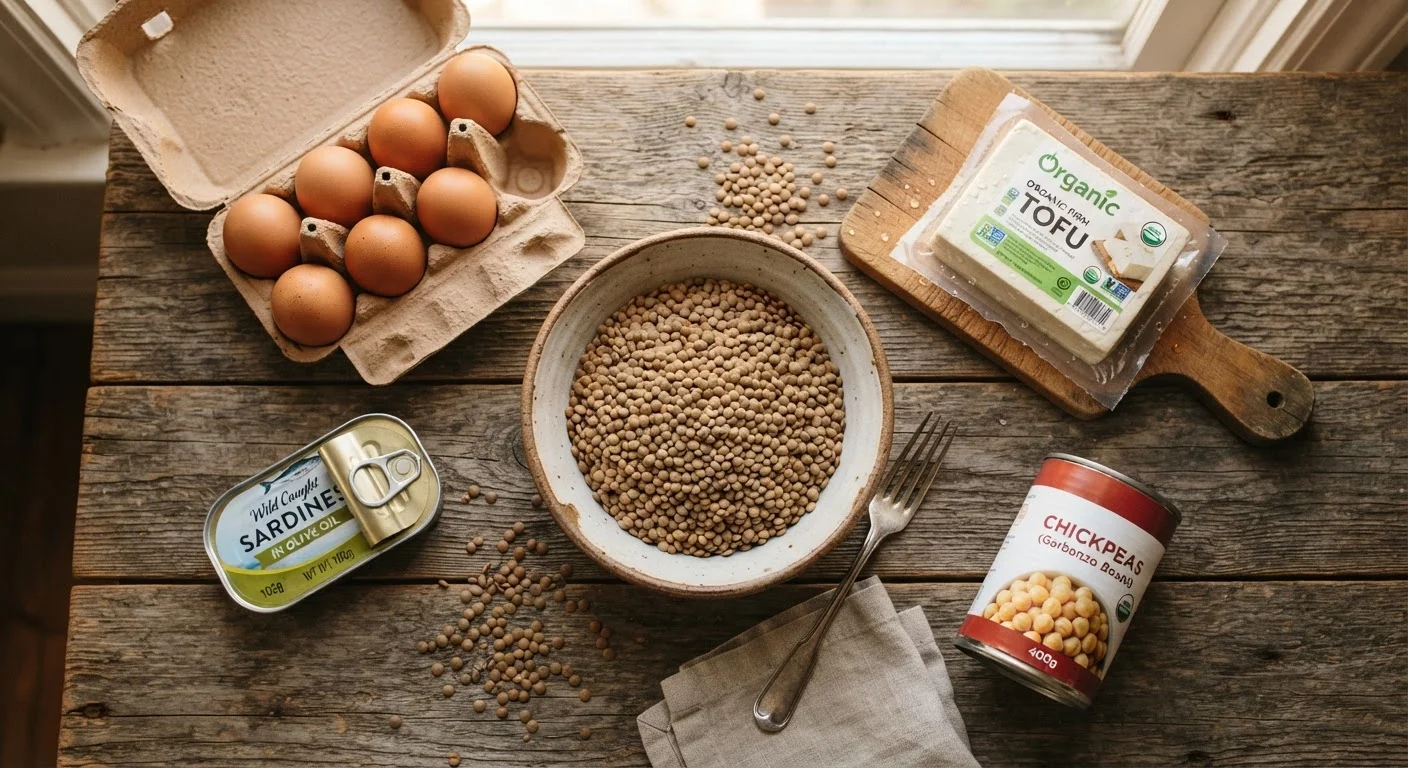
A dozen eggs contains more complete protein per dollar than almost any other food at a U.S. grocery store.
Dried lentils
Dried lentils are among the least expensive foods in the store by weight, and they expand considerably during cooking. One pound of dry lentils yields roughly six cups cooked, which is enough for several meals. A cooked cup contains around 18 grams of protein along with a significant amount of dietary fiber and iron.
Lentils do not need soaking, which cuts prep time compared to most dried beans. Red lentils break down into a thick, creamy texture well suited to soups and dal. Green and brown lentils hold their shape and work in grain bowls, tacos, or as a ground-meat substitute in pasta sauce. For families exploring plant-centered eating, how nutrition and cost intersect is worth reading alongside this.
One pound of dried lentils yields enough protein-rich cooked food for multiple family meals at minimal cost.
Canned fish
Canned tuna and canned sardines are two of the most reliably affordable animal proteins in U.S. stores. Canned tuna in water is a familiar pantry staple; canned sardines pack more omega-3 fatty acids and calcium per serving because the bones are edible and soft when processed. Both are shelf-stable and need no cooking.
Tuna works in sandwiches, pasta, and grain bowls. Sardines are well suited to toast with mustard or lemon, mixed into tomato-based pasta sauces, or served on crackers as a quick protein-heavy snack. People new to sardines often find the flavor milder than expected when the fish are packed in water rather than oil.
Canned sardines deliver omega-3 fatty acids and calcium alongside protein, at a price well below fresh fish.
Tofu
A 14-ounce block of firm tofu typically costs less than a pound of chicken thighs and contains roughly 30 to 35 grams of protein depending on the variety. Tofu is made from soybeans and is one of the few plant proteins considered complete, meaning it contains all essential amino acids.
Firm or extra-firm tofu holds up to pan-frying, baking, and stir-frying. Silken tofu blends into smoothies, scrambles, and soups. Pressing out moisture before cooking helps with browning. Marinating for thirty minutes in soy sauce, garlic, and a small amount of oil produces a savory result that works alongside rice and vegetables for a fast weeknight meal.
Tofu is a complete protein source that costs less per serving than most poultry cuts at standard grocery prices.
Dried or canned beans
Black beans, kidney beans, pinto beans, and chickpeas (also called garbanzo beans) are all available dried or canned, and both forms are inexpensive. Dried beans cost less per serving; canned beans trade a small price premium for convenience since they are already cooked and need only rinsing. A standard 15-ounce can provides roughly two to three servings with about 15 grams of protein per cooked cup.
Beans also supply soluble fiber, which supports digestive health, and a range of B vitamins. They work in chili, tacos, soups, grain salads, and mashed as a spread. Chickpeas roast well in the oven with a little oil and salt to make a crunchy snack that holds up in a lunchbox.
Canned beans are ready in minutes, cost under a dollar per can, and deliver protein and fiber together.
Cottage cheese
Cottage cheese is lower in cost than most other dairy proteins and often lower than Greek yogurt per ounce of protein. A half-cup serving contains roughly 12 to 14 grams of protein. It is high in casein, a slowly digested protein, which means it can help with satiety for several hours after eating.
Cottage cheese works in both savory and sweet applications. Mixed with fruit, it functions as a quick breakfast or snack. Blended smooth, it substitutes for ricotta in lasagna or stuffed pasta dishes at a lower price point. Seasoned with herbs, it spreads on toast. Families who already buy dairy will often find it one of the most cost-effective proteins already in the refrigerator aisle.
Cottage cheese costs less per gram of protein than Greek yogurt and works in savory dishes as a ricotta substitute.
Putting these proteins to work in real meals
Stretch proteins further with grains
Pairing plant proteins with whole grains such as rice, oats, or corn produces meals that feel more filling and cover a wider range of amino acids across the day. For example, rice and beans together provide a complementary amino acid profile that supports overall protein nutrition. You do not need to combine them at the same meal; eating both over the course of a day is sufficient. This pairing also means smaller portions of protein go further, which helps keep weekly spending low.
None of these proteins requires much cooking skill, but they do reward a little planning. Dried lentils and beans cook best in a larger batch and refrigerate well for four to five days, so one cooking session can cover several meals. Eggs and canned fish need almost no prep. Tofu benefits from pressing out excess moisture before cooking, which takes about fifteen minutes and produces a firmer texture that browns better in a pan.
Rotating across two or three of these sources each week is a practical way to keep meals from feeling repetitive while staying well under a typical meat-based grocery budget. For a framework on doing that week after week, a practical meal planning approach can help structure the decisions. These ingredients also pair well with the shelf-stable pantry staples covered in a guide to stocking a budget pantry, and the broader case for affordable nutrition is made plainly in why cheap food is not the same as unhealthy food.