

| Cost per serving: dried lentils | Roughly $0.10 to $0.20 per cooked half-cup serving (Based on typical U.S. grocery store pricing for 1-lb dry lentil bags) |
| Protein in cooked lentils (half-cup) | Approximately 9 grams (USDA FoodData Central) |
| Shelf life: dried beans and lentils | 1 to 2 years at room temperature (USDA Food Safety and Inspection Service guidelines) |
| Shelf life: commercially canned goods | 2 to 5 years, depending on product (USDA FoodData and food safety guidance) |
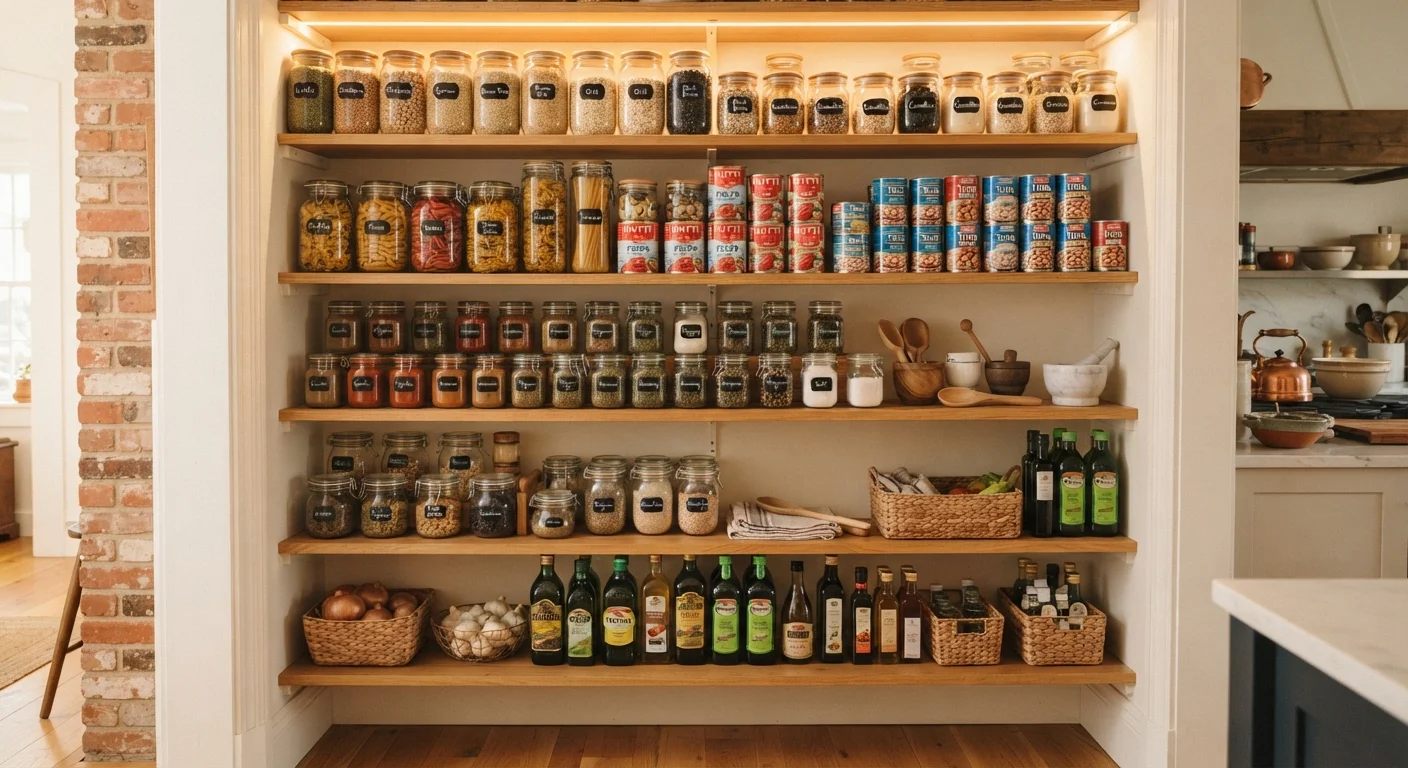
| Typical pantry starter items | Dried lentils, canned tomatoes, rice, pasta, cooking oil, dried spices, onions, garlic |
| Fiber in cooked lentils (half-cup) | Approximately 8 grams (USDA FoodData Central) |
Why a stocked pantry changes how you cook
When the pantry is bare, dinner decisions get expensive. You end up buying whatever is convenient, often at full price, because the alternative is skipping the meal. A pantry stocked with the right shelf-stable ingredients flips that equation: most nights you can put together a filling, nutritious dinner without buying anything at all.
This is not about hoarding or spending a lot upfront. It is about building a small, functional inventory over time so that your weekly grocery run fills in fresh items around a solid base. The goal is to reduce the number of nights when you have "nothing to eat" and reach for takeout instead.
For a fuller picture of how grocery spending works and where families tend to overspend, see what the numbers actually look like. And if you want a system for using these pantry items week to week, meal planning from scratch walks through that process.
Unit price
The cost per standard unit of measurement, such as per ounce or per pound. Comparing unit prices across package sizes tells you which size actually costs less, regardless of the sticker price.
Shelf-stable
Foods that can be stored at room temperature for an extended period without refrigeration. Examples include dried beans, canned tomatoes, pasta, and most cooking oils.
Complete protein
A food or meal that provides all nine essential amino acids the body cannot make on its own. Rice and beans eaten together cover all nine, though each is incomplete on its own.
Bouillon cube
A compressed block of dehydrated broth, salt, and flavoring. Dissolved in hot water, it creates a quick cooking liquid that adds depth to soups, grains, and sauces at a very low cost.
Legume
The seed family that includes beans, lentils, chickpeas, and peas. Legumes are high in plant protein and fiber, and are among the least expensive protein sources available in U.S. grocery stores.
The core pantry ingredients worth keeping on hand
Not every shelf-stable food earns its space. The items below are worth stocking because they are cheap per serving, nutritionally useful, and flexible enough to appear in many different meals.
| Cost per serving: dried lentils | Roughly $0.10 to $0.20 per cooked half-cup serving (Based on typical U.S. grocery store pricing for 1-lb dry lentil bags) |
| Protein in cooked lentils (half-cup) | Approximately 9 grams (USDA FoodData Central) |
| Shelf life: dried beans and lentils | 1 to 2 years at room temperature (USDA Food Safety and Inspection Service guidelines) |
| Shelf life: commercially canned goods | 2 to 5 years, depending on product (USDA FoodData and food safety guidance) |
| Typical pantry starter items | Dried lentils, canned tomatoes, rice, pasta, cooking oil, dried spices, onions, garlic |
| Fiber in cooked lentils (half-cup) | Approximately 8 grams (USDA FoodData Central) |
Dried and canned legumes
Dried lentils, black beans, chickpeas, and pinto beans cost very little per pound and provide protein, fiber, and iron. Canned versions cost more per serving but require no soaking and cook in minutes. Both belong in a budget pantry. The USDA's FoodData Central database confirms that a half-cup serving of cooked lentils contains roughly 9 grams of protein and 8 grams of fiber, making them one of the most nutritious options at that price point.
To learn more about legumes alongside other affordable protein sources, see proteins that consistently cost less than meat.
Whole grains and pasta
Brown rice, white rice, rolled oats, and dried pasta are the foundation of most low-cost meals. They absorb flavors from other ingredients, stretch small amounts of protein into full portions, and store for a long time. Buying the largest bag that fits your storage space usually lowers the unit price significantly.
Canned tomatoes
Whole, crushed, and diced canned tomatoes function as a sauce base, a braising liquid, and a soup starter. They are one of the cheapest ways to add flavor and acidity to a dish without relying on fresh produce.
Cooking oils, vinegar, and soy sauce
A neutral cooking oil, a bottle of distilled white or apple cider vinegar, and a bottle of soy sauce give you the fat, acid, and salt that most recipes need. These three condiments open up a wide range of cuisines without adding much to the weekly grocery bill.
Dried spices and aromatics
Garlic powder, onion powder, cumin, chili powder, smoked paprika, and dried oregano are the spices that appear most often in budget-friendly recipes. Fresh garlic and onions, though not shelf-stable, are cheap enough and keep long enough that most households treat them as pantry staples.
How these ingredients work together on a weeknight
The practical test of any pantry list is whether it produces real dinners. Here are four meal patterns that rely almost entirely on pantry staples, with fresh items limited to one or two per meal.
- Lentil soup: Dried lentils, canned tomatoes, onion, garlic, cumin, and broth (or water with a bouillon cube) combine into a filling soup in about 35 minutes. One pot, roughly $1.50 for four servings.
- Rice and beans: Cooked rice with seasoned black or pinto beans, plus any fresh vegetable you have on hand, is a complete protein when the two are eaten together, according to longstanding nutritional guidance.
- Pasta with tomato sauce: Dried pasta and canned crushed tomatoes, seasoned with garlic and oregano, is one of the lowest-cost dinners a family can make. Adding a can of white beans or a handful of frozen spinach raises the nutrition without raising the cost much.
- Grain bowls: Cooked brown rice or farro topped with a fried egg, any canned bean, and a drizzle of soy sauce and vinegar makes a quick dinner that uses almost nothing from the refrigerator.
Sheet pan dinners pair well with this pantry setup: a small amount of protein plus pantry spices and whatever vegetable is on sale covers most of the cooking for the week.
Building and maintaining the pantry without a large upfront cost
The practical way to stock a pantry is to add two or three items per grocery trip rather than buying everything at once. When dried beans are on sale, buy an extra bag. When pasta is at a low unit price, pick up two boxes. Over four to six weeks, the pantry fills in without a large single expense.
Before each shopping trip, a quick inventory check prevents both waste and duplicate buying. The weekly budget-shopping checklist covers that process in detail, including how to compare unit prices across package sizes.
Rotation matters too. Place newly bought items at the back of the shelf and older ones at the front. Most dried grains and legumes stay good for one to two years, and canned goods typically last two to five years when stored in a cool, dry place, though checking the date on each can is always worth doing.
A pantry-based cooking approach also reduces food waste because shelf-stable ingredients do not spoil while you are deciding what to make. That alone can lower a family's monthly grocery spending. For a full system that connects pantry management to weekly planning, building a family meal plan explains how to tie both together.