

Key Takeaways
Why small upgrades add up
Major renovations get most of the attention, but many of the most consistent household savings come from inexpensive fixes that take an afternoon or less. The U.S. Department of Energy has noted that air leaks and inadequate insulation account for a substantial portion of heating and cooling energy waste in typical American homes. That means small, targeted improvements can show up on utility bills within a billing cycle or two.
The upgrades listed here were selected because they address real, measurable losses rather than cosmetic issues. Most cost well under $50 in materials. None require licensed trades or permits. For a broader picture of where your utility dollars actually go, see where home energy bills actually go.
Door sweeps on exterior doors
The gap at the bottom of an exterior door is one of the most common and easiest-to-miss sources of conditioned air loss. A door sweep, which is a strip of rubber, vinyl, or brush material that seals the threshold gap, costs a few dollars and attaches with screws or adhesive in under 20 minutes. On exterior doors that get heavy use, this single fix can noticeably reduce drafts in adjacent rooms during winter months.
Look for a gap you can see light through when the door is closed. If light is visible, so is your heating and cooling loss. Automatic door bottoms, which retract when the door opens and drop to seal when it closes, cost more but last longer on high-traffic doors.
If you can see light under a closed exterior door, conditioned air is leaving through that same gap.
Outlet and switch plate gaskets on exterior walls
Electrical outlets and light switches on exterior walls often have no insulation behind the cover plate. Cold air moves through the box, through the wall cavity, and into the room. Pre-cut foam gaskets that fit behind standard cover plates cost less than a dollar each and take about two minutes per outlet to install. The cover plate comes off with one screw, the gasket drops in, and the plate goes back on.
This fix is especially worth doing in older homes where the wall insulation may be thinner or settled. Outlets on interior walls adjacent to an unheated garage or crawlspace benefit from the same treatment.
Foam gaskets behind outlet covers on exterior walls stop cold air intrusion for pennies per outlet.
Attic hatch insulation
Most pull-down attic stairs and hatch covers are bare wood or thin drywall with no insulation at all. Heat rises, and an uninsulated attic hatch is an open channel between living space and whatever temperature the attic holds. Rigid foam board cut to fit and attached with construction adhesive, or a purpose-built attic tent cover, addresses this directly.
The fix is worth prioritizing if the attic is unconditioned and the home has central heating or cooling. In cold climates, an uninsulated hatch can account for a disproportionate share of heat loss relative to its small physical size.
An uninsulated attic hatch can lose heat at a rate out of proportion to its small size.
Low-flow showerheads
Water heating typically accounts for roughly 14 to 18 percent of a home's energy use, according to the U.S. Department of Energy. A significant share of that goes to showers. Standard showerheads use around 2.5 gallons per minute; many low-flow models deliver 1.5 to 1.8 gallons per minute with pressure-compensating technology that maintains a usable stream.
For a household with two or more daily showers, the reduction in hot water demand adds up across the year. The hardware cost is low and installation requires no tools beyond an adjustable wrench and plumber's tape. Water savings also reduce the load on the water heater, extending the interval between maintenance cycles.
Reducing hot water use per shower lowers both water bills and water heater energy consumption simultaneously.
Smart power strips for entertainment and home office areas
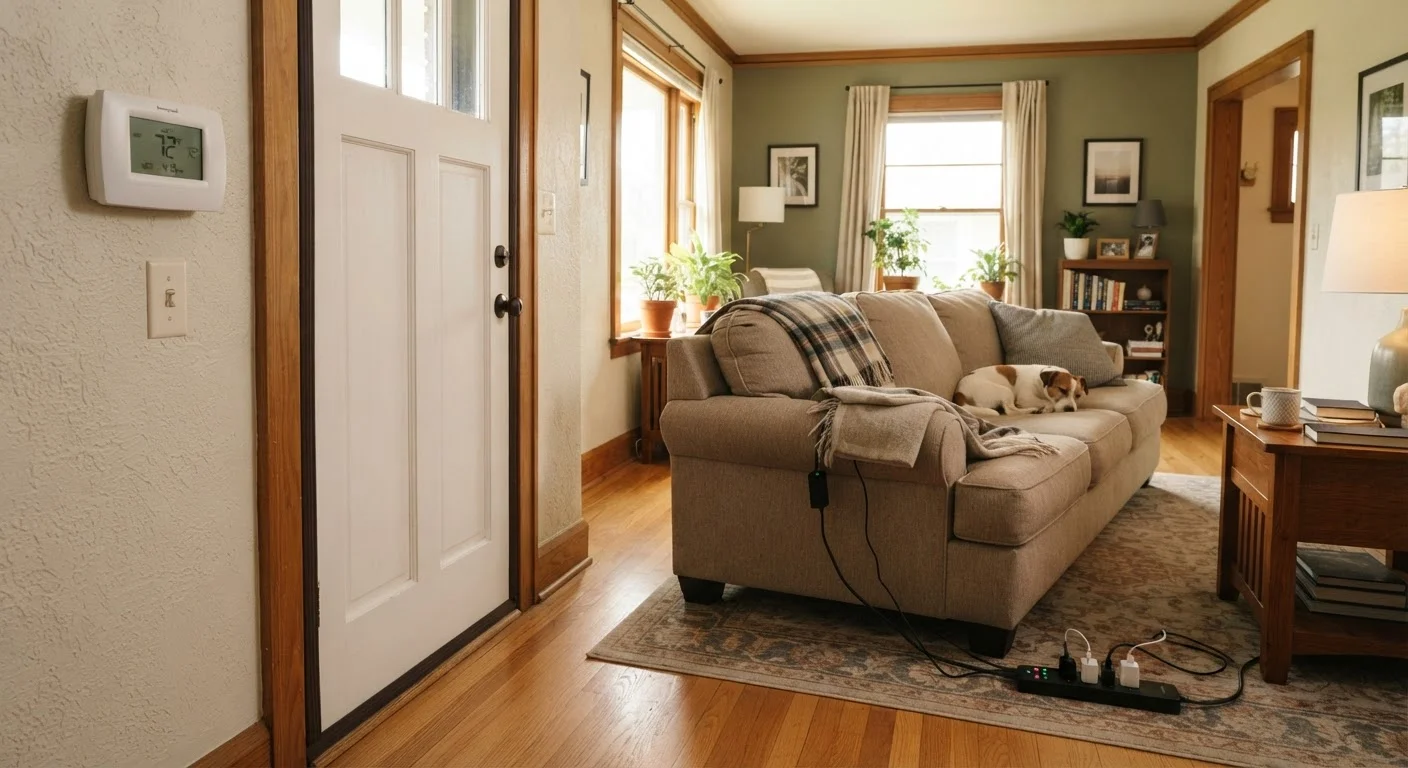
Many electronics draw power continuously when plugged in, even when switched off or in standby mode. This is called standby power or phantom load. The Lawrence Berkeley National Laboratory has estimated that standby power can account for roughly 5 to 10 percent of residential electricity use. A smart power strip cuts power to peripheral devices automatically when the primary device (a television or desktop computer) is shut off.
These strips use one always-on outlet for the primary device and switch the remaining outlets based on that device's power state. No habit change is required after the initial setup. They work well behind entertainment centers and at desk setups where multiple devices are clustered. For a fuller look at spending patterns that quietly drain household budgets, phantom load is one of several easy-to-miss costs worth addressing.
Standby power from idle electronics can account for a meaningful slice of the monthly electricity bill.
Pipe insulation on hot water lines
Hot water pipes that run through unheated spaces (basements, crawlspaces, garages) lose heat before the water reaches the tap. Foam pipe insulation sleeves, sold by the linear foot, slip over exposed pipes and reduce that heat loss. The result is water that arrives at the faucet or shower at a higher temperature, which means the water heater cycles less often to compensate.
This fix also reduces the familiar wait for hot water to arrive at a distant fixture, which cuts water waste from running the tap. In an unheated basement, even a short run of insulated pipe makes a measurable difference in winter months.
Insulating hot water pipes in unheated spaces reduces both heat loss and the wait time for hot water.
Getting the most from these changes
None of these upgrades exist in isolation. A door sweep does more work in a well-sealed home than in one with gaps around window frames. Sequencing matters: air-sealing first, then addressing insulation weak points, then tackling appliance and water-use efficiency tends to give the clearest return. For a direct comparison of sealing approaches, insulation, weatherstripping, and caulking breaks down where each method fits.
Start with a draft check before buying anything
Walk through the home on a windy day and hold your hand near door frames, window sashes, and electrical outlets on exterior walls. Any cold air movement you feel marks a gap worth sealing before moving to other upgrades. This costs nothing and directs your spending where it will have the clearest effect.
Before spending anything, walk through the home on a windy day with a lit incense stick or a damp hand near door frames, window sashes, electrical outlets on exterior walls, and attic hatches. Visible draft points are where money is leaving. Fix those first, then move to the other upgrades on this list. If you want a framework for tracking and prioritizing these investments, a working home repair budget can help keep the project from stalling.