

Key Takeaways
Why sheet pan dinners work for budget cooking
Sheet pan cooking is not a trend. It is a practical method that fits the way most families actually cook: short on time, watching grocery costs, and unwilling to spend 45 minutes washing dishes after dinner.
The cost advantage comes from structure. A typical sheet pan dinner uses one protein, two or three vegetables, and a few pantry seasonings. That narrow ingredient list means less waste and a more predictable grocery bill. For a deeper look at how ingredient count connects to weekly food costs, see our plain-language guide to family food budgets.
Bone-in chicken pieces, pork tenderloin, sausage links, and canned-then-rinsed chickpeas all roast well on a sheet pan. Pairing any of these with sturdy vegetables such as potatoes, carrots, broccoli, cauliflower, or cabbage keeps ingredient costs low because these items hold well through a full week of meal prep without spoiling.
Sheet pan cooking also reduces the chance of a failed meal. Everything goes into one hot oven, and the dry heat produces browning on vegetables and proteins that adds flavor without any extra ingredients or cost.
Cut vegetables to a consistent size
Uneven pieces cook unevenly. Cutting potatoes, carrots, or broccoli to roughly the same size (about 1-inch pieces) means everything finishes at the same time. This small prep habit reduces the chance of burning some pieces while others remain undercooked.
What you need before you start
The equipment list is short. A large rimmed baking sheet (sometimes called a half-sheet pan) is the one item that matters most. A thin or warped pan will cause uneven cooking. If you only have smaller pans, use two and rotate them halfway through the oven time.
What you will need
For seasonings and oils, a well-stocked pantry will cover almost every sheet pan recipe without requiring a separate trip to the store. Olive oil, canola oil, garlic powder, paprika, salt, and pepper handle the majority of flavor combinations.
Large rimmed baking sheet
Holds all ingredients in a single layer so they roast rather than steam.
Parchment paper or aluminum foil
Lines the pan to prevent sticking and makes cleanup faster.
Large mixing bowl
Used to toss vegetables and protein with oil and seasoning before spreading on the pan.
Instant-read thermometer
Confirms that poultry or pork has reached a safe internal temperature.
How to build and cook a sheet pan dinner
Follow these steps to put together a sheet pan dinner that feeds a family of four for a low per-serving cost. Adjust quantities up or down based on your household size.
Choose one protein and two or three vegetables
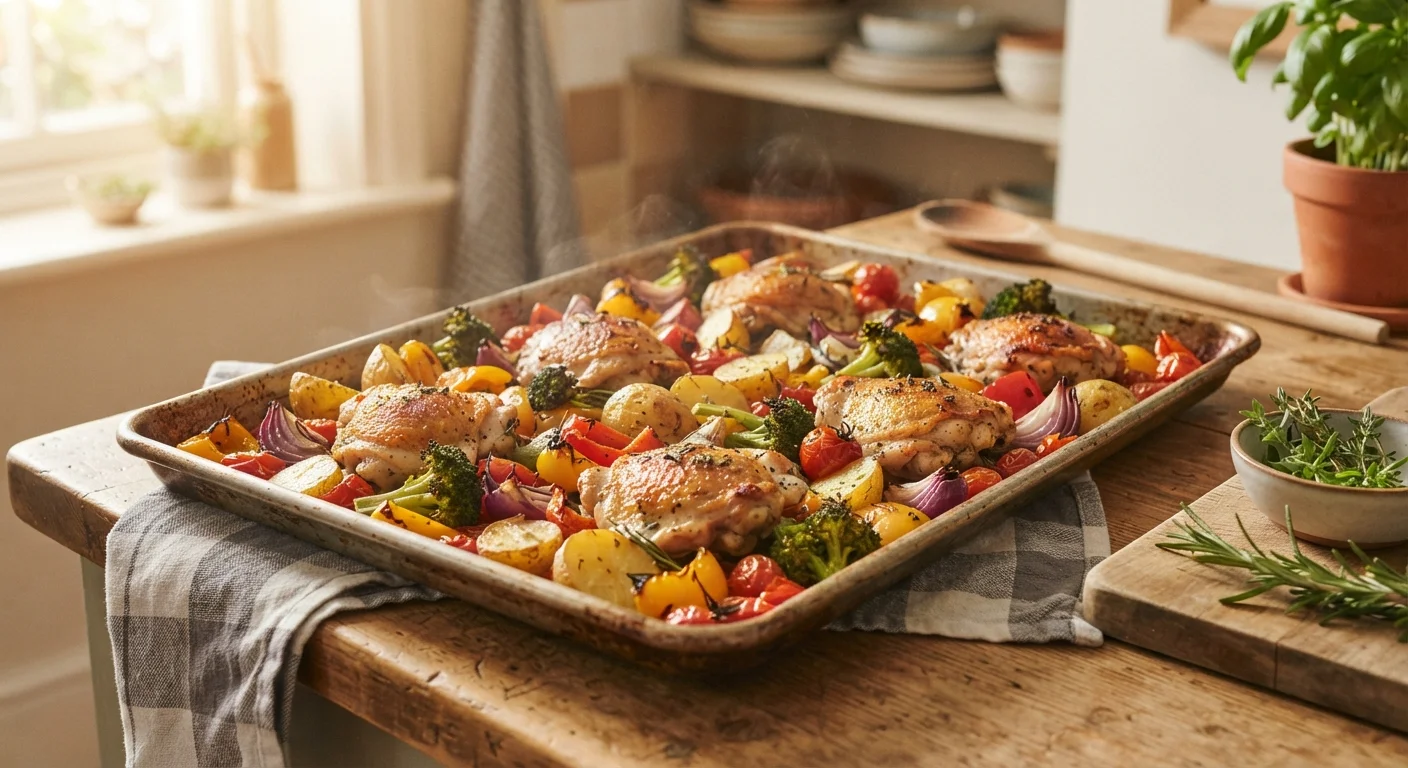
Pick a protein that roasts well at a consistent oven temperature. Bone-in, skin-on chicken thighs, pork tenderloin sliced into medallions, Italian sausage links, or a drained can of chickpeas all work. Budget-friendly vegetable options include potatoes, sweet potatoes, broccoli, cauliflower, carrots, cabbage wedges, and frozen green beans (thawed and patted dry).
Aim for vegetables that cook at roughly the same rate as your protein, or plan to add them in stages (see step 4).
Preheat the oven and prepare the pan
Set your oven to 400 degrees Fahrenheit. Most sheet pan proteins and vegetables roast well at this temperature. Line your pan with parchment paper or foil if you want faster cleanup.
Season everything in a bowl
Combine your protein and vegetables in a large bowl. Drizzle with one to two tablespoons of oil (enough to lightly coat everything). Add your seasonings: a simple combination of garlic powder, paprika, salt, and black pepper works for almost any combination of ingredients. Toss until everything is evenly coated.
Seasoning in a bowl rather than directly on the pan produces more even coverage and uses less oil.
Arrange on the pan in a single layer
Spread everything in one flat layer with space between pieces. Crowding the pan traps steam and prevents browning. If your pan is small, use two pans rather than stacking ingredients.
Place slower-cooking items (potatoes, carrots, dense root vegetables) toward the edges of the pan where heat is slightly higher. If your protein cooks faster than your vegetables, add the vegetables to the pan first and introduce the protein partway through.
Roast and check doneness
Slide the pan into the center rack of your preheated oven. Most combinations of chicken thighs and vegetables finish in 35 to 45 minutes. Pork tenderloin and sausage combinations typically finish in 25 to 35 minutes. Check doneness at the lower end of the time range to avoid drying out the protein.
Use an instant-read thermometer to confirm safe internal temperatures: 165 degrees Fahrenheit for poultry, 145 degrees Fahrenheit for pork (with a 3-minute rest). The USDA publishes recommended minimum internal temperatures for all common proteins.
Fitting sheet pan meals into a weekly plan
Sheet pan dinners work best when they sit inside a broader meal plan rather than as a one-off choice. When you plan three or four dinners in advance, you can buy vegetables in larger quantities, use the same protein across two different meals, and reduce the number of separate shopping trips.
Our first-timer's meal planning guide walks through the full process if you are new to planning ahead. For a focused approach to cutting grocery bills while keeping dinner enjoyable, see our family meal plan guide.
One useful habit: after you cook a sheet pan dinner, portion any leftovers into containers right away. Roasted vegetables and protein reheat well the next day as a wrap, grain bowl topping, or quick lunch. That second use drops the effective cost per serving further without requiring any additional cooking.