

Key Takeaways
Our Verdict
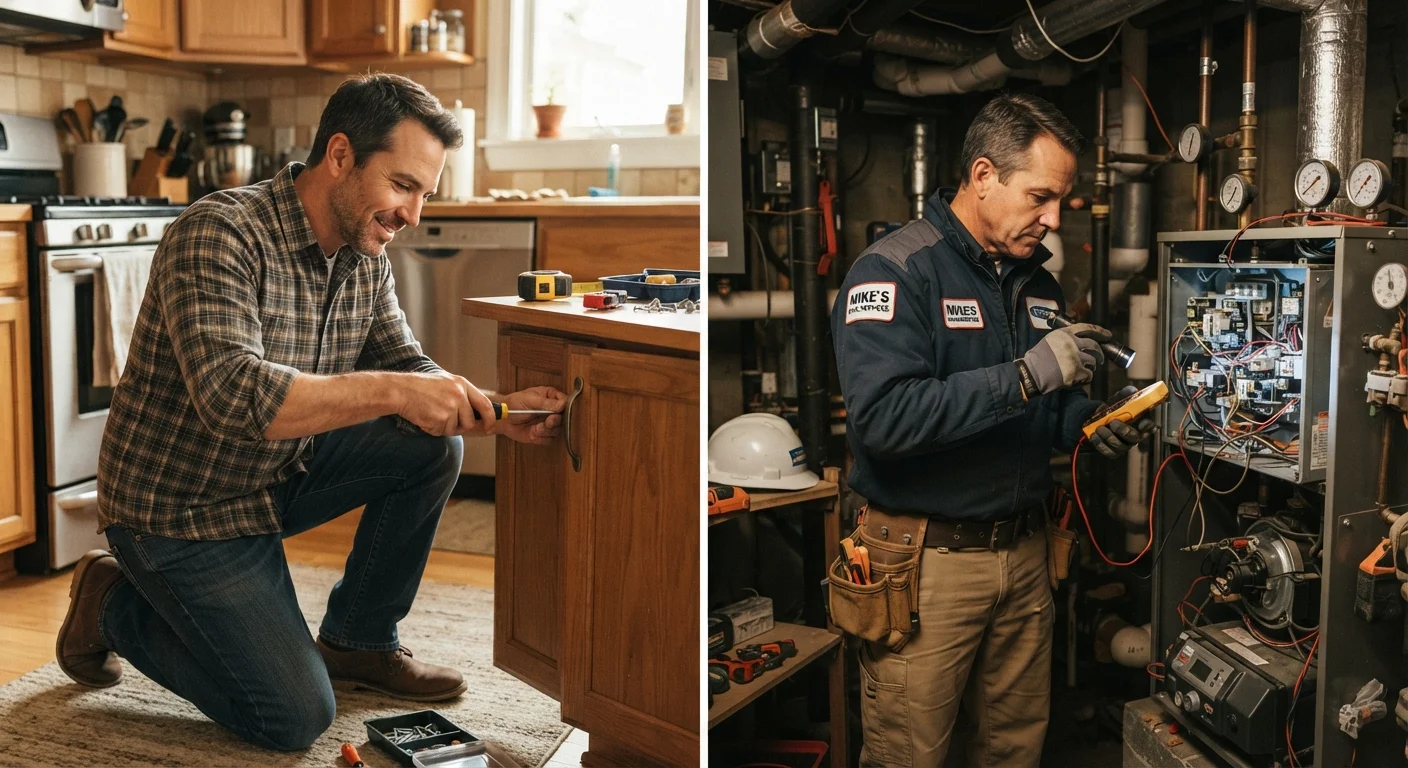
DIY works well for cosmetic, low-risk tasks where failure is recoverable and the skill gap is small. Professional help is worth the cost when safety, code compliance, or structural integrity is at stake. Most households benefit from doing both, depending on the task.
| Best for | Recommended |
|---|---|
| Homeowners with basic skills and time for low-risk tasks | DIY |
| Work involving electrical panels, gas lines, or structural elements | Hiring a pro |
| Repairs requiring local permits or code inspections | Hiring a pro |
| Cosmetic upgrades like painting, caulking, or minor patching | DIY |
The real question behind every repair decision
Before picking up a tool or calling a contractor, two questions cut through the noise faster than any cost estimate: Can a mistake here hurt someone? And does this job require a permit?
If the answer to either is yes, the case for hiring a licensed professional is strong, regardless of your skill level. Local building codes exist because substandard work on electrical systems, gas lines, load-bearing walls, and roofing creates risks that outlast the original repair. Many jurisdictions require inspections for this work, and unpermitted jobs can complicate insurance claims or home sales later.
For everything else, a more nuanced calculation applies. See our breakdown of common home maintenance myths for context on which repair beliefs are grounded in fact and which cost families money unnecessarily.
| DIY | Hiring a pro | |
|---|---|---|
| Typical task types | Painting, caulking, patching, weatherstripping | Electrical, gas, structural, roofing, HVAC |
| Permit usually required | Rarely | Frequently |
| Primary cost | Materials plus your time | Labor, materials, permit fees |
| Risk if done incorrectly | Cosmetic or minor functional issue | Safety hazard, code violation, or costly damage |
| Insurance and liability | Homeowner bears full risk | Contractor liability insurance applies |
| Skill required | Basic to intermediate | Licensed or certified trade |
What DIY realistically covers
Cosmetic and low-complexity repairs are where DIY delivers its clearest value. Patching small drywall holes, painting interior walls, replacing faucet washers, re-caulking a tub surround, swapping out light switch covers, and installing weatherstripping are all tasks where the failure mode is visible, recoverable, and inexpensive to redo. A poorly caulked tub is annoying; a poorly wired outlet is dangerous.
The honest accounting for DIY includes more than the cost of materials. Factor in tool purchases you would not otherwise make, the hours spent watching tutorials and doing the job, and the cost of a professional fix if the first attempt fails. For simple jobs, these numbers still favor DIY. For complex ones, they often do not.
Cheap fixes that seem thrifty upfront can create larger problems when they involve cutting corners on workmanship rather than simply choosing DIY over professional help. The quality of the work matters more than who performs it.
When professionals are worth every dollar
Electrical panel work, gas appliance installation, structural modifications, and roof replacement fall into a category where the consequences of errors compound fast. Water intrusion from an improperly flashed roof can cause mold and framing rot. A gas line connection done without proper fittings creates fire and carbon monoxide risk. These are not outcomes families can afford to gamble on to save a few hundred dollars upfront.
Licensed contractors carry liability insurance, which matters if something goes wrong after the job is complete. They also know which permits their work requires and handle the inspection process. That documentation protects homeowners when it comes time to file an insurance claim or sell the property.
Plumbing that connects to the municipal supply, HVAC system replacements, and any work touching the home's main electrical service panel generally belong in this column. If you are uncertain whether a specific job requires a permit in your area, your local building department can confirm before any work begins.
For families trying to allocate repair dollars wisely, a structured home repair budget makes it easier to set aside funds for professional jobs without scrambling when they come up.
Building a personal framework
A practical decision checklist covers four areas: safety risk, permit requirement, skill gap, and cost of failure.
- Safety risk: Could an error injure a family member or damage the structure? If yes, hire a pro.
- Permit requirement: Does local code require inspection for this work? If yes, hire a licensed contractor who can pull permits.
- Skill gap: Have you done this type of task before, or is there a clear, low-stakes way to practice? If the gap is large, factor in learning time honestly.
- Cost of failure: If the repair goes wrong, how much will correction cost? For high-cost failures, the professional fee is often cheaper than the risk.
Low scores on all four mean DIY is a reasonable choice. Any single high-risk factor warrants a professional quote before proceeding.
Small upgrades with an outsized impact illustrates how many genuinely effective home improvements land squarely in DIY territory, requiring only basic tools and an afternoon.